
Il cammino della speranza – The Path of Hope (Pietro Germi – 1950)
Published
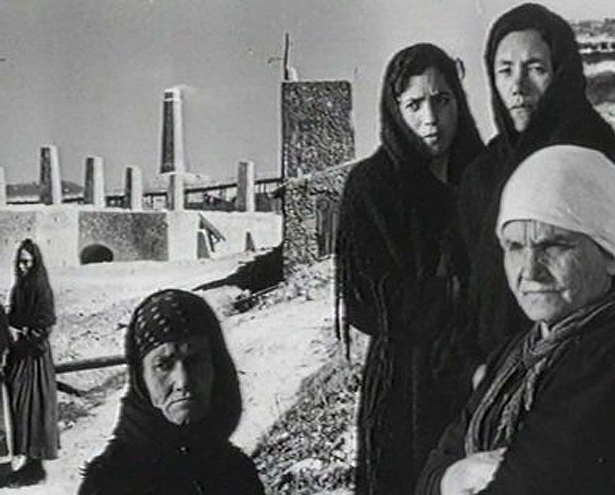
Right from the opening scene where you see the village women all veiled in black waiting patiently outside the mine for their husbands who refuse to come up to avoid the mine closing – you see direct similarities with another Neorealism harbinger – Visconti’s 1948 La terra trema (The Earth Trembles). Both films offer a great view into the Italian neorealism genre marked by social and economic hardships, use of non-professional actors and scenes shot on location vs. the studio.
The film is based on Nino Di Maria’s novel Cuori negli abissi and was co-written by Federico Fellini and Tullio Pinelli – great evidence of Fellini’s first steps in cinema.
What I liked about the film is the twist in Pietro Germi’s style, which typically focuses on plots set in Sicily – see his seminal works Divorce, Italian Style (1961) and Seduced and Abandoned (1963). Here, Germi starts the story in Capodarso, Sicily but follows the villagers on their journey to find a better life outside Sicily, uprooting them into unfamiliar locales – the streets of Rome, the snowy French Alps – creating unlikely combinations that make you think about what unites vs. divides people.
Throughout the film you’ll find the villagers singing as a ready respite from despair and the ambiguity of their future – their old village sing-along unites them and lifts their spirits immediately.
Germi uses facial expressions to convey a variety of emotions – from being at a loss and out of place in the big city, to anger at injustices, awe at new places, and finally the glimpse of hope in the twinkle of a boy’s smile when stopped by French police.
The film boasts a remarkable performance by Raf Valone as Saro, the villagers’ leader in their hope expedition, and the debut performance of Elena Varzi as Barbara.
The great composer Carlo Rustichelli blends village songs and high-note violins to charge scenes like the one where the exhausted villagers are stopped by French police on the Alps – rapid facial interplay between the policemen and the tired children moves from suspicion and disbelief to remorse at the sight of a boy’s smile, the embodiment of hope.
The film won major awards at the 1st Berlin International Film Festival and the 1951 Cannes Film Festival – Palme d’Or.
