
Archive for September, 2007

Published by Shlomi Ron on 28 Sep 2007

Umberto D. (Vittorio De Sica – 1952)

umberto d

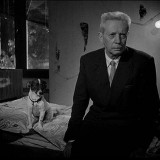
In one of the greatest accomplishments of the Neorealist film movement, Vittorio De Sica dedicates this film to his father and effectively captures the grim life of the elderly in post-war Italy.

The film paints a vividly emotional picture of Umberto D. (Carlo Battisti non-proessional actor - a university professor from Florence), an older man in Rome who struggles to pay his landlady debts. His privacy and pride are constantly abused by people who simply don’t care; the ruthless landlady (Lina Gennari) tries to evict him by renovating his room during his absence, former work colleagues politely listen to his problem but then elegantly disappear.

His only support comes from two sources: the housemaid, Maria played beautifully by Maria-Pia Casilio, who tries to help as much as she can considering her precarious situation – upcoming pregnancy from unknown father and unclear job prospects once the landlady finds out.

umberto d

And then there is Umberto’s dog Flike that functions as the ultimate bastion of support and loyalty throughout his owner’s ordeal. The use of the dog is indeed the director’s radical condemnation to further emphasize the crush of all social systems, the lack of human solidarity and communication where only a dog can provide that unconditional compassion.

Beyond the grim ambience, I found a few whimsical moments that provides interesting time-parallels. Maria, the teenaged housemaid, invents her own SMS service to communicate with her soldier friends. To fill in for the probable cellphone ringtone, we hear the trumpet sound several times throughout the film, that drives Maria running to the window in Umberto’s room, where outside in the piazza, her soldier friends clumsily signal her, while reporting to their unit.

What I took from the film is simple; in our daily quest to conquer the world, human communication and solidarity should take a front seat.

>Buy this film

Published by Shlomi Ron on 12 Sep 2007

Fists in the Pocket – I Pugni in Tasca (Marco Bellocchio – 1965)
i pugni in tasca

Marco Bellocchio, Italy’s second generation of film directors after WW2, highly influenced by the British cinema, provides in his film debut a counter and radical approach to the bourgeois family values, religion and the Neo-realism movement.

Charged with the director’s autobiographical elements, over the edge acting style and Ennio Morricone’s circular vocal treatments - the film tells the story of a dysfunctional family in a provincial house (director’s grandmother’s house in real-life).

Alessandro, played remarkably by Lou Castel provides the plot central point from which, using his twisted mind tricks and schemes the personalities of his other family members are revealed.

fists in the pocket

In various scenes Alessandro waves his palm across his face as if to signal some kind of internal order he religously follows. For the sake of this “order” he plots against his family members and executes his plans with minimal effort nudging victims only with his index finger. In such broad strokes Bellocchio conveys his indictment of Italian bourgeois life.

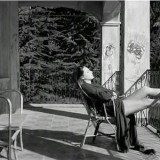
I especially liked the scene when Giulia (Paola Pitagora) who plays the sister, lies idly on her bed staring at the ceiling, then flipping boringly pages in a photo album of relatives’ portraits on her right nightstand, catches a glimpse of a book on her left nightstand and then positioning it vertically, starts reading, while puffing a cigarette that had already been positioned at the edge of the table. This aimless wandering in personal spaces that captures fleeting gratifications only to go back to a constant emptiness – is apparent throughout the film.

Looking at the film as a whole, the film weaves an ambience of tensed uneasiness stretched to the extreme that flanks the secluded life in the province (the pocket) against the boiling aspirations of its young inhabitants (the fists) to the possibilities of the world outside. In this respect, the film is indeed an internal representation of the transition in Italian society of those days.

Buy this film