
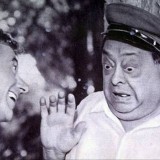
With 2015 coming upon us, I figured there is nothing like rewinding the clock back to this 1963 quaint cinematic gem to usher the New Year. Once upon a time there were 4 taxi drivers…This charming film brings four short films – urban fables if you will – that each captures a different human aspect… Continue reading I Quattro Tassisti – The Four Taxi Drivers (Giorgio Bianchi – 1963)
Category: Comedy
Il magnifico cornuto – The Magnificent Cuckold (Antonio Pietrangeli – 1964)
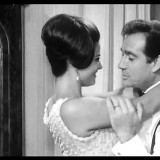
In this classic Italian comedy director Antonio Pietrangeli juxtaposes extra indulgence with absurdity as key ingredients that drive rich couple from northern city Brescia to completely lose it. Claudia Cardinale and Ugo Tognazzi The husband, Andrea Artusi, played by Ugo Tognazzi is the owner of a hat factory. He has a beautiful young wife, Maria… Continue reading Il magnifico cornuto – The Magnificent Cuckold (Antonio Pietrangeli – 1964)
Gli Anni Ruggenti – Roaring Years (Luigi Zampa – 1962)

I saw this charming Italian comedy the other night on YouTube projected on my big screen and tried to imagine some of the thoughts that ran through audiences’ minds who saw it for the first time in Italian movie theaters in the early 60’s. [youtube width=”615″ height=”470″]http://youtu.be/uxzYEqxrZHE[/youtube] Complete film I guess it reminded me of… Continue reading Gli Anni Ruggenti – Roaring Years (Luigi Zampa – 1962)
La famiglia passaguai – The Passaguai Family (Aldo Fabrizi – 1951)

It’s funny sometimes when you watch a film that you like and then come across another one done couple of years later with same theme and even same actors. For those of you who follow my occasional cinematic thoughts, you’ll find this film very similar to Domenica d’agosto – Sunday in August (Luciano Emmer -1949),… Continue reading La famiglia passaguai – The Passaguai Family (Aldo Fabrizi – 1951)
Domenica d’agosto – Sunday in August (Luciano Emmer -1949)
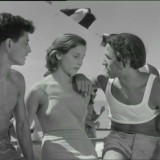
It’s August in Rome and it seems like the whole town has a single mission – go to the beach! You can watch this charming, time-capsule of a movie below (76 minutes, no English subtitles, though). [youtube width=”615″ height=”346″]http://www.youtube.com/watch?v=Uf1mTyF32v8&feature=share&list=PLU7L0O6PxEi14wMOExIx5mlUiW0ssEQIn[/youtube] Full film In this light comedy, categorized under “Pink Neorealism,” precursor to later Italian comedy genre (considering… Continue reading Domenica d’agosto – Sunday in August (Luciano Emmer -1949)