Archive for the 'Political' Category

Published by Shlomi Ron on 25 May 2007

Christ Stopped At Eboli - Cristo si è Fermato a Eboli (Francesco Rosi - 1979)

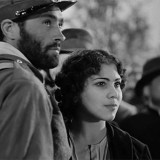
In this film, Francesco Rosi tells the story of painter Carlo Levi, an anti-fascist activist that was arrested in Turin in 1935 and was sent by Mussolini to the remote town of Gagliano (invented name) - in what is known today as Basilicata.

Christ stopped at Eboli

If you ignore the historical context of this film and focus on the quaint ambiance of a small village in Sicily, where old customs never changed in the past 3000 years – then you’re in for a remarkable journey into Italian peasantry culture.

The film vividly depicts the interactions of Levi (Gian Maria Volontè) with the locals from a perspective of an outsider, which is nicely aligned with viewers watching the film. The camera work is superb, inquisitively exploring the village and its people, while applying layered natural textures. If you look closely you’ll notice the intricate tapestry of objects and people that if paused would appear as a timeless oil painting.

I especially liked the dinner scene when Levi meets the local tax collector who vehemently shares the woes of his job collecting tax from the poor peasants. His only salvation is playing the clarinet. You can clearly identify with him and the burden of his “thankless job.” It’s a solid presentation of humanity and compassion.

Pierro Piccioni, Rosi’s long-time collaborator, provides a tantalizing soundtrack that explores the vast boundaries of the timeless existence of peasant culture compared to the modern world Levi is coming from. You can clearly feel the wide expanse of time and space and the futility in trying to bridge the two worlds. Listen to a fine sample here and you’ll hear what I mean.

In case you wondered, the film’s title “Christ Stopped at Eboli” is in fact an Italian expression to convey that old ways and belief system held by the villagers are stronger than their Christianity.

>Rent this film from Netflix - Only $4.99 a month!

>Buy this film

Published by Shlomi Ron on 26 Feb 2007

The Escort - La Scorta (Ricky Tognazzi - 1993)

Ricky Tognazzi’s classic anti-mafia thriller is deeply grounded in reality. The film was made a year after judge Giovanni Falcone was murdered as he was on his way to Palermo airport. The judge, his wife, and three police bodyguards were killed. Interestingly the film is not about the judge or the case, but focuses on the four bodyguards and the close bonding they develop with his replacement prosecutor, an outsider sent from Rome strange to the Sicilian ways.

La ScortaYou might expect a fast-paced movie with lots of action, but then again you’re in for another surprise. The film manages a restrained undercurrent tension that causes you to believe that any second something radical is about to happen as the bodyguards face threats on the road shuttling the investigator back and forth in his quest to seek justice. However, for the most part nothing major happens as the plot zigzaging leaves you with a constant “that was close” sensation. I would say it’s probably a much accurate capture of bodyguard reality than the typical 90-minutes of endless pyrotechnics.

If you are also a fan of Ennio Morricone, you’re in for a treat. Not yet? Well, you definitely should be. Morricone, this year’s winner of the Honorary Oscar award for lifetime achievement, provides a pounding score. The music perfectly supports this mounting tension that hits the bodyguards externally as they dodge various dangers on the job, and internally with the strain it brings on their families.

The message is simple. If you look around you, you too can see that often the real heroes are not necessarily those prime time figures busy rescuing the world. It’s in fact their support teams those faceless helpers behind the scenes that carry the heavy load. And as we know these so-called margins are far more interesting than the center as the neorelaist film movement has proven time and again. Real stories of real people that with recent waves of reality TV shows and YouTube’s user generated media - are now back in vogue.

>Rent this film from Netflix - Only $4.99 a month!

>Buy this film

Published by Shlomi Ron on 27 Jan 2007

Hands over the City - Le Mani Sulla Città (Francesco Rosi - 1963)

Hands

The characters and events shown are imaginary
The social and environmental
context is real

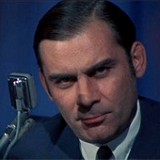
Fracesco Rosi’s outrageously bold social realism film ends with the above condemning statement. The film offers a unique over the shoulder view into the world of political deal making and corruption in Naples of the early 60’s. Rod Steiger effectively plays the ruthless, power-hungry real-estate speculator that successfully negotiates his way, disregarding needs of the people - in a scandal that has devastated Naples’s civilian landscape.

The film won the 1963 Venice Film Festival Golden Lion and vividly separates the bad guys from the good guys. However, beyond the obvious injustices, it offers a solid reality check. You start looking around you and gradually the picture becomes clearer. We’re all surrounded by outcomes good or bad that are nothing but a direct result of long influence chains of conflicting elements that somehow along the way aligned their interests and negotiated a deal or outcome. It could be your local shopping mall, interest rates, even this computer screen you’re staring at right now. It’s an outcome comprised of a long influence chain: chip suppliers, LCD manufacturer, computer maker, retailers and finally you the consumer - all operating with varying degrees of interests - to negotiate the best deal.

It could have been great if our world had unlimited resources and you could pretty much do anything you like with no consequences on others. Put simply, no losers only winners. Maybe someday when we can completely digitize our physical existence and create a virtual world where you can have endless digital copies of vital resources. Forget Web 2.0, Web millennium anyone? But then again you might say this could be a lonely and somewhat retarded world with no challenges where innovation is stifled.

Nice vision…until then we not only have to play with what we have, but also find ways to do it optimally. Enter Social Economics. The scientific study of the choices made by individuals and societies in regard to the alternative uses of scarce resources, which are employed to satisfy wants. Rosi’s pessimistic view shows how real estate choices in his beloved Naples are ransacked by political and business influence chains, which work only to satisfy their greedy wants. And Piero Piccioni’s erratic music does a superb job to support this premise.

To some extent Rosi’s message is still pertinent today. That said, these days wer’e all part of interconnected social and professional networks with new means of making a bottom-up impact. What influence chains are you playing with and for what outcomes?

>Rent this film from Netflix - Only $4.99 a month!

>Buy this film

Published by Shlomi Ron on 25 Dec 2006

Partner (Bernardo Bertolucci - 1968)

I had no particular expectations from this film. I believe a film synopsis has this ingrained tendency to misrepresent sometimes. In this film Bernardo Bertolucci takes you to his early days in cinema, during the tumultuous late 60’s. It’s highly experimental, with erratic jump cuts, inconsistent plot line, political propaganda (Free Vietnam!) and occasional stylistic scenes that stand aloof just because of their aesthetics. A memorable scene is the giant shadow on a building that kicks away a smaller shadow of the main character.

The film is based on a short story by Dostoyevsky “The Double.” Bertolucci modified it a bit to tell the story of Jacob (Pierre Clémenti) a lonely theater teacher who invents his double, yet a much more extrovert and fierce copy. Cast members you may recognize include Stefania Sandrelli, Sergio Tofano, and Ninetto Davoli (Pasolini’s favorite actor). At the time films required by law to use at least 2 film students, so Bertolucci figured the more the merrier and included dozen students from the Experimental Film Centre in Rome.

I found the film hard to watch because of its incoherent storyboard and over experimentalism. It all made sense though when I watched the interview with Bertolucci in the bonus material. He then reveals the fact that he didn’t find himself connected to the mainstream commercial cinema of the 60’s in Italy – mostly comedy. Instead he opted to follow the French New Wave cinema. So his mission was to contradict the status quo in almost every scene he made.

Another interesting fact he shares, and I wonder if any of you readers can validate, Italian directors at the time never recorded the sound of actors on location – only visuals. They always dubbed it later in the editing room, whereas Bertolucci claims to be the first to capture both visual and audio from his actors. Fascinating!

>Rent this film from Netflix - Only $4.99 a month!