
Published by Shlomi Ron on 24 Dec 2007

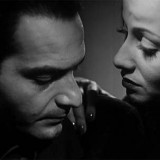
Rome Free City - Roma Città Libera (Marcello Pagliero - 1946)

YouTube Preview Image

Where have you been during winter 1946?

Since some of us would likely say - nowhere, here is a time capsule from that period in Rome, right after WW2 is over. The American GI’s are still in town and the people wake up into the rough realities of making a living in a battered economy.

The film is a fine example of a lighter take on the neorealism genre, borrowing from the success of its emblematic predecessor - Roma Citta Aperta by Roberto Rossellini, made a year earlier. In fact, both Marcello Pagliero, the director of this film, and Nando Bruno – both played in Roma Citta Aperta.

The film uses themes of daily hardships in a much lighter tone, illustrating variety of characters that coincide one rainy night in an intricate plot that moves a pearl necklace from hand to hand.

From Andrea Checchi, who contemplates suicide over the departure of his treacherous girlfriend (Marisa Merlini), the struggling typist (Valentina Cortese) who can’t pay her rent and opts to street life, the petty thief with a good heart (Nando Bruno). And the dignified minister who lost his memory and keeps asking everyone “do you recognize me?” played beautifully by Vittorio de Sica. Friendships are formed quickly to navigate the criminal elements the night summons. Only at dawn the picture becomes clearer as things are never like they initially seem. That’s where the film extra title comes handy - La Notte Porta Consiglio - The Night Gives Wisdom.

This plot is supported by an endless chain of cigarette-smoking, alcohol/espresso-drinking, you would recognize the theme song composed by maestro Nino Rota. He then reused it in Fellini’s “I Vitelloni.” The music veers from a somber pessimistic flair to a whimsical, comic tone with a promise that no matter what, things will eventually work out fine.

Looking through another prism, with today’s Internet gold rush ignited by twenty something entrepreneurs – this film too was created from nothing by twenty something pioneers with a burning fire to explore the new medium. In fact, this is Pagliero’s first film. It didn’t find major success, but nevertheless it’s a fantastic gem with all the time-specific trappings of people, challenges, culture and Rome before its piazzas were transformed into car garages…

>Rent this film from Netflix - Only $4.99 a month!

>Buy this film

Published by Shlomi Ron on 15 Dec 2007

Nights of Cabiria – Le Notti di Cabiria (Federico Fellini – 1957)

nights of cabiriaThis is the last film of Fellini’s second triliogy that started with La Strada (1954) and Il Bidone (1955). A trilogy dedicated to themes of people living on the margins of society (street dancer, swindler and a prostitute) that despite their rough lives eventually experience radical life change, call it redemption.

In this film, Fellini brings back Cabiria, the prostitute with the heart of gold played beautifully by his wife Giulietta Masina. Fellini has already presented us with the role of Cabiria in his 1952 film The White Sheik. There Cabiria is consoling poor Ivan at the piazza late at night after he lost hope of finding his wife.

After the dismal reviews both critically and in the box office for his previous film Il Bidone (1952), Fellini comes back two years later with the proposal of The Nights of Cabiria and receives the cold shoulder everywhere he turns. Practically, the film is about a life of a prostitute in Rome – a tough sell in 1950’s Italy. The film was eventually produced by the one and only - Dino de Laurentiis.

The film tells the story of Cabiria a Roman prostitute with an intricate personality. On one hand she’s the tough street-smart taking no pimp to manage her affairs, constantly bragging about her independence, owning her own home. On the other, she’s very fragile, naïve and desperately romantic who really wants to change her life.

Throughout the film Fellini shows us how swindlers take advantage of Cabiria; the film opens when she was thrown into the Tiber river after being mugged, and then another shady type named Oscar is fooling her with the illusion of a true love only to rob her of all her life savings.

Interestingly, there is one scene in the film that was just recently added since the church objected to include it in the original release. The scene is known as The Man with the Sack, showing a man with a big sack going from one cave to another, giving out food for the poor residents of these makeshift shelters. The church objection rationale is clear – that should have been the church role.

Another scene, shows Cabiria visiting a sacred place with her friends where they all pay their dues for a chance to be redeemed and have a life changing experience. After the service is over, during which Cabiria was deeply moved – there is a lovely scene where Cabiria and her friends are having a picnic and Cabiria suddenly realizes that nobody has really changed they’re all the same including the cripple who joined them.

Fellini provides us with a clear message about the role of the church that operates as a dream machine or some kind of lottery where you pay a ticket for a chance to win a better life. But as we know odds are slim. Cabiria’s friends accept that logic, but not Cabiria who sees through it all and in a way is asking for a refund.

nights of cabiria

The primary message of the film is simple, yet powerful. You would think that after Cabiria has been duped so many times, human trust is practically non-existent – she would break down. Yet, Fellini existential and optimistic view, shows us that redemption does not rely on external sources, but is coming from within oneself.

Simply put, YOU control your emotional climate and destination.

>Rent this film from Netflix - Only $4.99 a month!

>Buy this film

Published by Laura Bianconcini on 07 Nov 2007

From Cinemasud San Diego: Ballo a tre passi – The three steps dance (Salvatore Mereu 2003)
balloI have been waiting for this and the following movie for months. I am thrilled. This is my own root region (partially) and I have the privilege to be in and out of the scene.

Sardinia, where its crystal waters are seen with suspects, and its dark remote caves are a shelter. A land of sheep and shepherd; cardoons and cork oaks, basalt and granite; tough orbace and delicate filigree; slanting eyes and black, thick eyebrows; legend and truth; divinities and saints. Land where everything is elusive and stationary at once. Where people talks with the look. Where the sun doesn’t bring smiles, and the light is in the night.

With this peculiar, unique background Salvatore Mereu, young director, brought to life a little masterpiece of colors, feelings, characters, and sceneries. Clearly inspired to the visionary representation of Fellini, sweetly surrealistic, he fulfills our desire of cinema with no expectations.

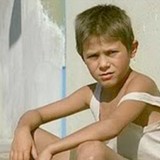
Divided into 4 chapters, linked to the 4 seasons, he traces a profile of Sardinian life that is naive and sweet. He’s able to bring out the poetry hidden inside its ancestral tight limits. The Spring, the discovery, when the children run toward the sea for the first time, on those interminable dunes of white sand. The summer, the wonder, when the shepherd meets the love among his remote caves. The autumn, the look back, when the young noun comes back to the village for a wedding that could have been hers. The winter, the dignity, when the old man tries to escape from the unavoidable lonely life of the city through the dream and the kindness of a prostitute.

A movie difficult to follow if you need a traditional plot, but art doesn’t need a plot. This is a sweet romantic photo of the hidden poetry of Sardinia.

Since I couldn’t find a trailer, this is a piece of real life from the village where my sister lives, Bortigali (area Il Marghine, province Nuoro, Sardegna) .

YouTube Preview Image

>Buy this film

Published by Laura Bianconcini on 20 Oct 2007

From Cinemasud San Diego: Tornando a casa - Returning home (Vincenzo Marra 2001)

ballotrepassi

Sunday October 13, 2007 Cinemasud continues its path.

It’s late, I have to hurry. They won’t wait for me. I push my lazy legs pedaling as fast as I can.

I finally arrive after 10 infinite panting minutes. I am breathless, but at the reception everybody is there. Pasquale, Clarissa, Serena, and sweet Victor. Grazie in any case. I hate watching a movie already started. Clarissa after a list of due thanks, introduces the film Tornando a casa (Returning home – like we decided to translate – she says) by Vincenzo Marra, 2001.

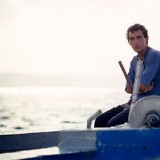
A small crew of 3 Neapolitan fishermen and an Algerian is working in Sicily. They sail further though, they expand their Mediterranean territory to the richer waters of Africa, more fish, four times the money. Dangerous clandestine fishing.

While Salvatore, (Sasa’ local nickname) the owner of the boat, and Giovanni, the oldest of the group, are excited to have this chance to make more money Franco, the youngest, is worried and not in favor of this practice. Samir, does not have too many choices. He is a clandestine everywhere. A few more days just to make the money.

The next night is the end of the job. They are shut, they loose the nets, they go back to scoop them up, they break the boat, so they decide to go back to Naples. Back in Naples, they try to settle in the local fishing business. But how can we expect that things would improve in such a movie coming from the old realistic school? Verga taught us, Visconti too.

In Naples (Pozzuoli), the crew is sabotaged by the local mafia who want to control the fishing job putting Sasa’ in big debts, and Rosa, Franco’s wife dies in an accident. Giovanni has to bring his young son to work to help earning money and support the family.

The only way of surviving is to go back to Sicily where they can fish yet not live. And Franco takes the only opportunity to actually leave. A symbolic end. Franco mingling among African clandestine will be sent back to his country, where with no ids or connections, will represent its rescue.

It’s a sad reality. A sad life, away from home and from the family. We wouldn’t even imagine that it still exists today. This movie definitely follows a neo-realistic foundation. It has been compared to La Terra Trema by Luchino Visconti (1948) film about the tragedy of the sea life of fishermen in Sicily – as many of the actors are not even professionals. And they only speak dialect.

Who are these characters today? Sasa’ owner of a boat, could be considered a lucky man – within the environment – however lonely, fishing for all his life, the group-crew is the only real family. Giovanni, old, needs to support his a big family. Franco is young and – with nothing else - has the classic American dream, although his young wife Rosa, is not willing to it.

Samir is a clandestine everywhere, in his country won’t be accepted, and in Italy could be resent back to his country. He has nothing to lose, because he already lost everything, his identity. And this, in the end, would actually result from the sad perspective of Franco a new possibility of life. The last chance.

Next »