
Published by Shlomi Ron on 24 Dec 2007

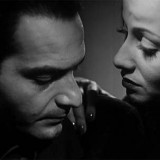
Rome Free City - Roma Città Libera (Marcello Pagliero - 1946)

YouTube Preview Image

Where have you been during winter 1946?

Since some of us would likely say - nowhere, here is a time capsule from that period in Rome, right after WW2 is over. The American GI’s are still in town and the people wake up into the rough realities of making a living in a battered economy.

The film is a fine example of a lighter take on the neorealism genre, borrowing from the success of its emblematic predecessor - Roma Citta Aperta by Roberto Rossellini, made a year earlier. In fact, both Marcello Pagliero, the director of this film, and Nando Bruno – both played in Roma Citta Aperta.

The film uses themes of daily hardships in a much lighter tone, illustrating variety of characters that coincide one rainy night in an intricate plot that moves a pearl necklace from hand to hand.

From Andrea Checchi, who contemplates suicide over the departure of his treacherous girlfriend (Marisa Merlini), the struggling typist (Valentina Cortese) who can’t pay her rent and opts to street life, the petty thief with a good heart (Nando Bruno). And the dignified minister who lost his memory and keeps asking everyone “do you recognize me?” played beautifully by Vittorio de Sica. Friendships are formed quickly to navigate the criminal elements the night summons. Only at dawn the picture becomes clearer as things are never like they initially seem. That’s where the film extra title comes handy - La Notte Porta Consiglio - The Night Gives Wisdom.

This plot is supported by an endless chain of cigarette-smoking, alcohol/espresso-drinking, you would recognize the theme song composed by maestro Nino Rota. He then reused it in Fellini’s “I Vitelloni.” The music veers from a somber pessimistic flair to a whimsical, comic tone with a promise that no matter what, things will eventually work out fine.

Looking through another prism, with today’s Internet gold rush ignited by twenty something entrepreneurs – this film too was created from nothing by twenty something pioneers with a burning fire to explore the new medium. In fact, this is Pagliero’s first film. It didn’t find major success, but nevertheless it’s a fantastic gem with all the time-specific trappings of people, challenges, culture and Rome before its piazzas were transformed into car garages…

>Rent this film from Netflix - Only $4.99 a month!

>Buy this film

Published by Laura Bianconcini on 07 Nov 2007

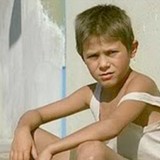
From Cinemasud San Diego: Ballo a tre passi – The three steps dance (Salvatore Mereu 2003)
balloI have been waiting for this and the following movie for months. I am thrilled. This is my own root region (partially) and I have the privilege to be in and out of the scene.

Sardinia, where its crystal waters are seen with suspects, and its dark remote caves are a shelter. A land of sheep and shepherd; cardoons and cork oaks, basalt and granite; tough orbace and delicate filigree; slanting eyes and black, thick eyebrows; legend and truth; divinities and saints. Land where everything is elusive and stationary at once. Where people talks with the look. Where the sun doesn’t bring smiles, and the light is in the night.

With this peculiar, unique background Salvatore Mereu, young director, brought to life a little masterpiece of colors, feelings, characters, and sceneries. Clearly inspired to the visionary representation of Fellini, sweetly surrealistic, he fulfills our desire of cinema with no expectations.

Divided into 4 chapters, linked to the 4 seasons, he traces a profile of Sardinian life that is naive and sweet. He’s able to bring out the poetry hidden inside its ancestral tight limits. The Spring, the discovery, when the children run toward the sea for the first time, on those interminable dunes of white sand. The summer, the wonder, when the shepherd meets the love among his remote caves. The autumn, the look back, when the young noun comes back to the village for a wedding that could have been hers. The winter, the dignity, when the old man tries to escape from the unavoidable lonely life of the city through the dream and the kindness of a prostitute.

A movie difficult to follow if you need a traditional plot, but art doesn’t need a plot. This is a sweet romantic photo of the hidden poetry of Sardinia.

Since I couldn’t find a trailer, this is a piece of real life from the village where my sister lives, Bortigali (area Il Marghine, province Nuoro, Sardegna) .

YouTube Preview Image

>Buy this film

Published by Shlomi Ron on 09 Aug 2007

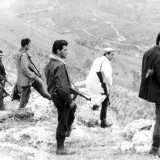
Salvatore Giuliano (Francesco Rosi – 1962)
Salvatore Giuliano

In this masterpiece classic director Francesco Rosi tells the story of Salvatore Giuliano, a famous Sicilian gangster that during the mid-40’s collaborated with a Sicilian separatist group, Movement for the Independence of Sicily (MIS), with close ties to the Mafia engaging with small-scale attacks on government and police targets.

Rosi delivers a poignant documentary that whisks viewers back and forth in time – the superiority of Giuliano’s gang over the police (carabinieri) and later depicting his funeral and court sessions. Interestingly enough, Rosi does not provide us with direct first person dialogs from Giuliano, we learn a lot about him through his friends and the results of his actions.

The real villagers of Montelepre – that helped Giuliano - provide a deeper sense of credibility for the narrative, largely because in essence they renact the true events they experienced first hand. A most memorable scene, is the crying women dash towards the carabinieri after learning that their arrested husbands – suspected of collaborating with Giuliano - are about to be transferred to Palermo. The sheer emotional force of this clash that illusrates the immense power of the immediate family circle and the village strong solidarity - is profound.

Salvatore Giuliano

The film is also about the importance of commuication with its diverse manifestations. We hear Giuliano’s gang whistling on hill tops to alert the arrival of the carabinieri, we hear the village drummer announcing the latest curfew orders, the village women spreading the word about the fate of their husbands, and the court sessions where conflicted interests play out the evidence about the responsibles for the massacre at Portella Della Ginestra.

The soundtrack by Piero Piccioni provides a charged suspense ambience that minimalistically supports the dramatic events that unfold, leaving ample space for the natural sounds and the occasional voice over to carry most of the emotional direction.

Gaspare Pisciotta (Giuliano’s deputy), played skillfully by Frank Wolff (postwar trend of many Italian directors to use American actors), demonstrates the transition of Pisciotta from being Giuliano’s most dedicated right hand into a collaborator with the carabinieri. As the social environment is rapidly evolving with conflicting interests surfacing either by historical events, mafia pressures, bandit alliances, carabinieri, family and community – are constantly pushing protagonists to optimize stances.

>Rent this film from Netflix - Only $4.99 a month!

>Buy this film

Published by Laura Bianconcini on 21 Feb 2007

Special Interview with Director Mimmo Calopresti at Grand Opening of Los Angeles-Italia Film Festival

LA-Italia Film, Fashion & Art Festival

We enter the VIP lounge and start a fight for the food. The buffet is overcrowded, as it’s already 10pm. Hands grabbing us from every side like uncontrollable tentacles, hard to keep away, so I decide to hit the bar and get some wine, leaving Shlomi and Odelia to the food mission.

After drinking some wine and getting some food, we start looking around. Small groups of Italians spread here and there, with their unmistakable natural pop-star attitude, which make them, by definition, charming. A little loud, happy and totally unaware of American customs, they smoke more or less everywhere. Spontaneously charming I would say.

Our goal is to interview Mario Monicelli, that would be Shlomi’s dream-come true, one of the classic masters of Italian cinema. Unfortunately he’s secluded on a corner, between a protective assistant and a giant bodyguard. Although the informal environment would allow us to approach him pretty easily, after looking his sweet old look, I don’t feel like disturbing him, clearly immersed in a contemplative personal silence, out of the crowd.

We look around. Tony Renis, no. He really is not part of our plans. Franco Nero, famous Italian actor, well-known for his spaghetti western movies. Father of Carlo Gabriel Nero, the director of the last movie of tonight with Vanessa Redgrave (his mother), The Fever.
No, even him, with all our respect, does not meet our target.

Mimmo CaloprestiSuddenly I find myself next to Mimmo Calopresti, and this is almost like a coincidence. Why we didn’t think of him before? His early screening tonight – Volevo Solo Vivere (I Only Wanted to Live) is a documentary showcasing interviews with Italian holocaust survivors that were deported to Auschwitz.

Mimmo has an open smile, on a very Italian good-looking face. Italiano del sud, which makes him even more distinctive, more Mediterranean. He doesn’t speak English, or he doesn’t want to. So we decide to talk only in Italian, easier for me, more challenging for Shlomi.

He is an open person, towards the people. Respectful. His eyes move around quickly, however there is something that makes me notice his deep attention to everything, to any ordinary thing. Maybe it’s his bloodhound nose. It’s fun and interesting having Mimmo’s attention and kindness, in a quieter corner.

We ask Mimmo some questions about the movie we just saw. The following details what we got from Mimmo’s interview at the the bar and from a short Q&A on stage after the screening.

QIt’s a strong theme, why did you choose it?
A – Because since I studied this at school, I have been always interested in understanding what happened. However, the question that never left me was WHY this happened. I have tried to find an answer, even through this work, but I didn’t. I didn’t find any answer to this question. The only thing, important thing, is that from all of this we have to learn to prevent anything like this, from happening again. We must not forget.

QHow did you choose the interviews, based on what?
A – I chose those that I felt to be the most emotional to me. Those that touched me the most.

QHave you ever been to Israel?
A– Yes I did. I have also been to Auschwitz. I went with Walter Veltroni (the mayor of Rome), who every year takes students there from different schools. Once I went with them, it was a very strong experience.

QWhy a documentary?
A – To be precise, I actually started my career as a documentary director. I have done other documentaries in fact. I have always been interested in social topics.

QAnd what about your next work?
A– My next work is a fiction; we have just finished shooting it. It’s called L’Abbuffata – The Pigout.

Not knowing his previous works, our questions must end. We thank Mimmo and let him go to his friends. While we promise ourselves to watch his movies. And of course, review them!

More information about the work of Mimmo Calopresti from Repubblica
Mimmo Calopresti was born in Calabria, the region on the point of the boot. He lived in Torino for many years and here is where he started his job. He makes his first documentary A proposito di sbavature in 1985, followed by Alla Fiat era cosi’ (1990), a series of interviews to some ex blue-collar working in Fiat during 1969 when the social and political revolutionary movement wrapped Italy. Then, his first fiction interpreted by Nanni Moretti, La Seconda Volta– The Second Time in 1995. Set up in the tidy Torino, Mimmo Calopresti tells us with a great courage of words the terrorism of those times. It is a success recognized inside and outside the country. With La Parola Amore Esiste– The Word Love Exists (1998) he goes to Rome to set up the story of a cello teacher (Fabrizio Bentivoglio) and a weird beautiful girl (Valeria Bruni Tedeschi). The confirmation of his original style makes this work remarkable in several international festivals. In Preferisco il rumore del mare – I prefer the noise of the sea (2000) he is also actor, next to main character interpreted by Silvio Orlando. La felicita’ non costa niente- Happyness doesn’t cost anything, is from 2002. Mimmo Calopresti, tells about people who attempt to live with their personal contradictions, conscious of the urgency of making a choice and of its probable consequent mistakes.