Archive for the 'Neorealism' Category

Published by Shlomi Ron on 20 Apr 2008

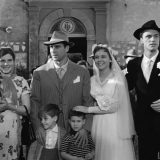
Big Deal on Madonna Street - I Soliti Ignoti (Mario Monicelli – 1958)

On one hand you can look at this film and say it’s all about men camaraderie in effort to solve an economical problem, and indeed the relationships among the protagonists run the gamut from support, anger, humor, and compassion.

And yet, this film is known as the first to usher the Italian Comedy (Commedia All’Italiana) genre of the late 50’s that lasted until the 70’s. Director Mario Monicelli provides a unique opportunity to see in one film some of the biggest names in Italian cinema; comedian Totò, Vittorio Gassman, Marcello Mastroianni and Claudia Cardinale in a minor role that started her career.

The original US trailer

The film combines stylistic choices from the Italian neorealism, postwar film noir in the US and France, packed with a fine dose of comedy of errors. This mixed bag of styles provides the film with a sense of lightness and parody, specifically about Rififi, a French melodrama that was a big hit in those days in Italy.

I especially liked the jazzy soundtrack by Piero Umiliani that supports the plot’s rapid pace as the mastermind scheme to break a safe of a pawnshop in Rome, is “scientifically” planned and then hilariously executed.

Some of the scenes feels almost like a Pink Panther cartoon, as Cosimo (Memmo Carotenuto) attempts to rob a bank, covers his pistol under a newspaper approaches the counter with the barrel showing and asks the clerk “Do you know what’s that?” hoping to alarm the clerk to submit the cash. But surprisingly, the clerk calmly responds by taking the pistol from him and knowingly declaring the pistol’s model number and make. Cosimo with wide-eye shock immediately scurries away.

The film’s title “I Soliti Ignoti” (The Usual Unknowns) derives from a newspaper jargon that describes crimes executed by unknown criminals. The film had a sequel in 1985, named “Big Deal on Madonna Street – 20 years later,” directed by Amanzio Todini.

>Buy this film

Published by Shlomi Ron on 26 Feb 2008

Bicycle Thieves - Ladri di biciclette (Vittorio De Sica – 1948)

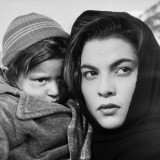
Bicycle Thieves

Stories about the common man emphasizing social issues, scenes shot in actual locations, and the use of non-professional actors – are the key ingredients of the Neorealist film movement in postwar Italy, which this film is one of its prominent expressions.

Directed by Vittorio De Sica and adapted for the screen by Cesare Zavattini based loosely on the novel by Luigi Bartolini, the film tells a simple story. A man’s bicycle gets stolen and he looks for them. No wonder De Sica had difficulties to finance the film. You might say it’s a film about nothing.

Yet, there is so much more.

De Sica vividly paints a reality of dire economic conditions with consistent use of crowds in various contexts; fighting to get a job in the opening scene, in an endless line at the bus station, leaving a stadium, and waiting for a piece of bread at the church. Everything seems like a huge struggle. So against this backdrop of rough settings, even the sense of finally finding a job comes with a catch. Antonio, played beautifully by Lamberto Maggiorani, needs to have a bicycle in order to get the job. His wife (Lianella Carell) figures out a way to get back their pawned bicycle and off he goes on his first day on the job.

The scene of swarms of morning commuters either on bicycles, on foot or on overflowing buses pans nicely to Antonio’s facial expression of pride of being able to provide for his family – is very strong. Against all odds he overcame all obstacles and found a way to make a living.

Finding a job, and figuring out a way to keep it are key elements De Sica uses in order to substantiate the buildup of the accomplishment and the earth shattering sensation when this precious locomotive is being stolen the next day, thus crumbling Antonio’s aspirations for a better future. Emotions of deep haplessness and loneliness bring out powerful performances from father and son – two non-professional actors that could have probably experienced such predicaments in their personal lives.

Bicycle ThievesAntonio and his son Bruno (Enzo Staiola) are then thrown into an impossible quest of finding the bicycle somewhere around Rome. The father-son relationship throughout this journey is a rare examination of weighing priorities; finding the bicycles, the key to survival or recognizing the son’s needs as extenuated in the river scene.

The message of the film is clear. No matter how low you sink, the unconditional bonds you have with your loved ones should override any external threats.

> Buy this film

Published by Shlomi Ron on 24 Dec 2007

Rome Free City - Roma Città Libera (Marcello Pagliero - 1946)

Where have you been during winter 1946?

Since some of us would likely say - nowhere, here is a time capsule from that period in Rome, right after WW2 is over. The American GI’s are still in town and the people wake up into the rough realities of making a living in a battered economy.

The film is a fine example of a lighter take on the neorealism genre, borrowing from the success of its emblematic predecessor - Roma Citta Aperta by Roberto Rossellini, made a year earlier. In fact, both Marcello Pagliero, the director of this film, and Nando Bruno – both played in Roma Citta Aperta.

The film uses themes of daily hardships in a much lighter tone, illustrating variety of characters that coincide one rainy night in an intricate plot that moves a pearl necklace from hand to hand.

From Andrea Checchi, who contemplates suicide over the departure of his treacherous girlfriend (Marisa Merlini), the struggling typist (Valentina Cortese) who can’t pay her rent and opts to street life, the petty thief with a good heart (Nando Bruno). And the dignified minister who lost his memory and keeps asking everyone “do you recognize me?” played beautifully by Vittorio de Sica. Friendships are formed quickly to navigate the criminal elements the night summons. Only at dawn the picture becomes clearer as things are never like they initially seem. That’s where the film extra title comes handy - La Notte Porta Consiglio - The Night Gives Wisdom.

This plot is supported by an endless chain of cigarette-smoking, alcohol/espresso-drinking, you would recognize the theme song composed by maestro Nino Rota. He then reused it in Fellini’s “I Vitelloni.” The music veers from a somber pessimistic flair to a whimsical, comic tone with a promise that no matter what, things will eventually work out fine.

Looking through another prism, with today’s Internet gold rush ignited by twenty something entrepreneurs – this film too was created from nothing by twenty something pioneers with a burning fire to explore the new medium. In fact, this is Pagliero’s first film. It didn’t find major success, but nevertheless it’s a fantastic gem with all the time-specific trappings of people, challenges, culture and Rome before its piazzas were transformed into car garages…

>Buy this film

Published by Shlomi Ron on 28 Sep 2007

Umberto D. (Vittorio De Sica – 1952)

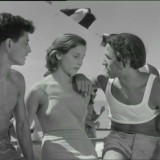
umberto d

In one of the greatest accomplishments of the Neorealist film movement, Vittorio De Sica dedicates this film to his father and effectively captures the grim life of the elderly in post-war Italy.

The film paints a vividly emotional picture of Umberto D. (Carlo Battisti non-proessional actor - a university professor from Florence), an older man in Rome who struggles to pay his landlady debts. His privacy and pride are constantly abused by people who simply don’t care; the ruthless landlady (Lina Gennari) tries to evict him by renovating his room during his absence, former work colleagues politely listen to his problem but then elegantly disappear.

His only support comes from two sources: the housemaid, Maria played beautifully by Maria-Pia Casilio, who tries to help as much as she can considering her precarious situation – upcoming pregnancy from unknown father and unclear job prospects once the landlady finds out.

umberto d

And then there is Umberto’s dog Flike that functions as the ultimate bastion of support and loyalty throughout his owner’s ordeal. The use of the dog is indeed the director’s radical condemnation to further emphasize the crush of all social systems, the lack of human solidarity and communication where only a dog can provide that unconditional compassion.

Beyond the grim ambience, I found a few whimsical moments that provides interesting time-parallels. Maria, the teenaged housemaid, invents her own SMS service to communicate with her soldier friends. To fill in for the probable cellphone ringtone, we hear the trumpet sound several times throughout the film, that drives Maria running to the window in Umberto’s room, where outside in the piazza, her soldier friends clumsily signal her, while reporting to their unit.

What I took from the film is simple; in our daily quest to conquer the world, human communication and solidarity should take a front seat.

>Buy this film

Next »