
Archive for the 'Neorealism' Category

Published by Shlomi Ron on 28 Sep 2007

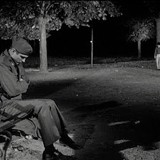
Umberto D. (Vittorio De Sica – 1952)

umberto d

In one of the greatest accomplishments of the Neorealist film movement, Vittorio De Sica dedicates this film to his father and effectively captures the grim life of the elderly in post-war Italy.

The film paints a vividly emotional picture of Umberto D. (Carlo Battisti non-proessional actor - a university professor from Florence), an older man in Rome who struggles to pay his landlady debts. His privacy and pride are constantly abused by people who simply don’t care; the ruthless landlady (Lina Gennari) tries to evict him by renovating his room during his absence, former work colleagues politely listen to his problem but then elegantly disappear.

His only support comes from two sources: the housemaid, Maria played beautifully by Maria-Pia Casilio, who tries to help as much as she can considering her precarious situation – upcoming pregnancy from unknown father and unclear job prospects once the landlady finds out.

umberto d

And then there is Umberto’s dog Flike that functions as the ultimate bastion of support and loyalty throughout his owner’s ordeal. The use of the dog is indeed the director’s radical condemnation to further emphasize the crush of all social systems, the lack of human solidarity and communication where only a dog can provide that unconditional compassion.

Beyond the grim ambience, I found a few whimsical moments that provides interesting time-parallels. Maria, the teenaged housemaid, invents her own SMS service to communicate with her soldier friends. To fill in for the probable cellphone ringtone, we hear the trumpet sound several times throughout the film, that drives Maria running to the window in Umberto’s room, where outside in the piazza, her soldier friends clumsily signal her, while reporting to their unit.

What I took from the film is simple; in our daily quest to conquer the world, human communication and solidarity should take a front seat.

>Rent this film from Netflix - Only $4.99 a month!

>Buy this film

Published by Shlomi Ron on 24 Apr 2007

The White Sheik - Lo Sceicco Bianco (Federico Fellini - 1952)

Are you a Yankee fan? A Madonna die-hard? Or better yet a Sanjaya zealot?

By having sports or entertainment idols we develop a perfect extension of our identity. You might say, an aspired identity full of good looks, talents and fortunes. In this parallel worlds dynamics, whatever happens to your subject of admiration in their world is immediately mirrored to your life. Since everyone associate you with a recent win of your team or artist, now you’ve become a winner too. And yes, the opposite is also true…

The White SheikFederico Fellini’s first film as a director delves deeper into the implications of idolizing heroes of the Fumetti – photo novels – that were very popular during the 40’s in Italy.

The film, a clever comedy, tells the story of a newly wed couple that arrives to Rome to meet the husband’s relatives.

What the husband Ivan (Leopoldo Trieste) doesn’t know is that his wife, Wanda (Brunella Bovo), a Fumetti fan had been exchanging letters with the White Sheik (Alberto Sordi), her favorite Fumetti hero, who invites her to meet him in Rome.

The hoplessly enamored Wanda ends up on a remote set location 30 km away from Rome. In essence, trashing her husband’s carefully planned visit, leaving him worried-sick and in constant need of excusing her absence to his relatives.

The result is a comic, yet a touching story, in which Fellini also introduces us to Cabiria, the compassionate prostitute who consoles poor Ivan, played by Fellini’s wife Giulietta Masina. Her fine performance serves as the basis for her lead role in 1957 Nights of Cabiria.

I especially like the funny wide eye-popping routine that both Ivan and Wanda employ. Yet, each for two different ends. Ivan for expressing shock transformed into anger over the disappearance of his wife. And Wanda for experessing awe morphed into a dreamy look when she meets the White Sheik (Sordi) for the first time. She made it! She crossed the boundaries of her mandane reality and made it to her hero’s fantasy world.

The film is blessed by the sensitive soundtrack of Maestro Nino Rota, Fellini’s loyal collaborator throughout his film career. The circus-like music during the beach scene that serves as set location for filming the photo novel - is strong and whimsical.

This scene is important because it demonstrates the fake boundaries between reality and fantasy, when creating entertainment content. The galore of celebrities on camera is flanked by their human vulnarability munching on a sandwich during a lunch break or when The White Sheik (Sordi) is reduced to tears after fighting with his wife.

The film’s message is clear. We all like to carry various idols - our perfect alter-egos that may compensate for our human imperfections. But in reality, obviously no one is perfect including these idols that the media is daily selling us basking in eternal stardust.

Who is/was your White Sheik?

>Rent this film from Netflix - Only $4.99 a month!

>Buy this film

Published by Shlomi Ron on 27 Jan 2007

Hands over the City - Le Mani Sulla Città (Francesco Rosi - 1963)

Hands

The characters and events shown are imaginary
The social and environmental
context is real

Fracesco Rosi’s outrageously bold social realism film ends with the above condemning statement. The film offers a unique over the shoulder view into the world of political deal making and corruption in Naples of the early 60’s. Rod Steiger effectively plays the ruthless, power-hungry real-estate speculator that successfully negotiates his way, disregarding needs of the people - in a scandal that has devastated Naples’s civilian landscape.

The film won the 1963 Venice Film Festival Golden Lion and vividly separates the bad guys from the good guys. However, beyond the obvious injustices, it offers a solid reality check. You start looking around you and gradually the picture becomes clearer. We’re all surrounded by outcomes good or bad that are nothing but a direct result of long influence chains of conflicting elements that somehow along the way aligned their interests and negotiated a deal or outcome. It could be your local shopping mall, interest rates, even this computer screen you’re staring at right now. It’s an outcome comprised of a long influence chain: chip suppliers, LCD manufacturer, computer maker, retailers and finally you the consumer - all operating with varying degrees of interests - to negotiate the best deal.

It could have been great if our world had unlimited resources and you could pretty much do anything you like with no consequences on others. Put simply, no losers only winners. Maybe someday when we can completely digitize our physical existence and create a virtual world where you can have endless digital copies of vital resources. Forget Web 2.0, Web millennium anyone? But then again you might say this could be a lonely and somewhat retarded world with no challenges where innovation is stifled.

Nice vision…until then we not only have to play with what we have, but also find ways to do it optimally. Enter Social Economics. The scientific study of the choices made by individuals and societies in regard to the alternative uses of scarce resources, which are employed to satisfy wants. Rosi’s pessimistic view shows how real estate choices in his beloved Naples are ransacked by political and business influence chains, which work only to satisfy their greedy wants. And Piero Piccioni’s erratic music does a superb job to support this premise.

To some extent Rosi’s message is still pertinent today. That said, these days wer’e all part of interconnected social and professional networks with new means of making a bottom-up impact. What influence chains are you playing with and for what outcomes?

>Rent this film from Netflix - Only $4.99 a month!

>Buy this film

Published by Shlomi Ron on 21 Jan 2007

Miracle in Milan – Miracolo a Milano (Vittorio de Sica - 1951)

Miracle in Milan

Take a close look at the this picture. What do you think is happening?

A lot has been written about this neorealist modern fairy tale from Vittorio de Sica - the director of ‘The Bicycle Thief’. If you haven’t seen this masterpiece yet, pick one of your gloomy days (we all have a few) and watch it. This heartwarming film is bound to give you the correct perspectives mixed with a great need to do good.

I picked this photo because it effectively illustrates the irony of our modern rat race after fame and money and the inevitable question of how much enough is enough. This especially rings true in today’s youth worship of entertainment idols. Jake Halpern’s new book Fame Junkies has recently revealed that given a choice of becoming the CEO of a major corporation, the president of Yale or Harvard, a Navy SEAL, a U.S. senator or “the personal assistant to a very famous singer or movie star,” almost half of the surveyed teenagers chose the assistant role. Not even being the celebrity, just carrying his/her suitcases… Scary!

If you haven’t seen the film, that’s ok. All you need to know is that in this scene Toto, a young guy discovers he has a magic dove that can fulfill any wild fantasy his poor shantytown’s friends might have.

The picture shows an anxious crowd formed around Toto (not shown) who makes any wish come true. It’s interesting to see how quickly human desires morph from materialistic objects like a fur coat, a suitcase, or a sewing machine - into physical enhancements; becoming taller, curing stutter or changing skin color, and finally to wanting money and lots of it.

As you can see, some of the folks here are already dressed up with their initial wish - fancy hats and fur coats and are now vehemently competing to receive the highest amount of money. The scene starts with the fellow on the right who just wants 1 million, the bearded guy chimes in with 3 million and then the exchange turns into a contest for who has the longest breathing power to demand as many millions as possible: millione, millione, millione, millione………. illione, lione, MILLONE!

Sadly, I find De Sica’s message relevant even after 56 years. It’s about setting the right priorities, both personally and collectively. We’re all victims to a wide range of human greed: power, status, beauty, lust and much more that muddy up our waters daily. However when all is said and done, we’re all short-term tenants in this world, and it all boils down to simply having the basics necessary to lead a decent life, as the film theme song suggests:

Ci basta una capanna
per vivere e dormir
ci basta un po’ di terra
per vivere e morir
Dateci un po’ di scarpe
le calze e anche il pan
A queste condizioni
crediamo nel doman

All we need is a hut to live in
where we can lay our heads
A plot of earth to toil in
where we can live and die
Give us a pair of shoes
some stockings and also a loaf of bread
In these conditions
we’ll believe in tomorrow


>Rent this film from Netflix - Only $4.99 a month!

>Buy this film

« Prev - Next »