Published by Shlomi Ron on 13 Jan 2008

Whoever Says the Truth Shall Die (Philo Bregstein - 1981)

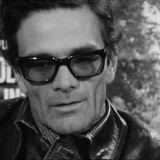
PasoliniA lot has been written about Italy’s prominent, yet controversial film director, poet and journalist Pier Paolo Pasolini. This documentary film by Philo Bregstein offers a rare glimpse into the tumultuous life of Pasolini until his still unresolved murder circumstances in 1975.

Rare, because the film was made six years after Pasolini’s death and so his memory is still fresh in the accounts of the people interviewed, which helps paint a much richer picture about the man, his background, personality, perspectives and the mystery behind his death.

The film showcases interviews with dignitaries such as Italy’s important poet Alberto Moravia that helps us place Pasolini’s in history. Moravia underscores his significance by talking about most poets before Pasolini came from the right and focused on aggrandizing Italy’s rich history. Pasolini was the first poet with left views that lamented the decline of Italian society, especially in the early 60’s where mass consumerism like television, he believed, contaminated the basic virtues of the simple people and their genuine cultures. That’s why Pasolini beyond being openly gay (a scandalous affair in those days), was attracted to the proletarians in the underworld of the Roman borgate. In this sense, Moravia believes Pasolini’s death was simply an accident that derives from his penchant for violent relationships as depicted in his two novels Ragazzi di vita (Boys of Life) and Una vita violenta (A Violent Life).

The film also brings actress Laura Betti (appeared in several of Pasolini’s films) that fought hard with the Italian justice system to find out what exactly happened that night. Her account suggests a reality that perceived Pasolini - because of his radical views and sexual preference – as a public threat and often times used him as scapegoat. He was brought to trial 33 times, yet acquitted every single time.

I especially liked the interview with renowned film director Bernardo Bertolucci that goes back to the early days of their friendship. Pasolini invited Betolucci to be his assistant in his first film Accatone, which tells the hardships of Pasolini’s friends - the boys from the Roman slums, but using his signature heroic ambiance. The way Betolucci tells it both he and Pasolini never had any cinematic experience, so every scene was practically an historic invention in the making. Betolucci poignantly concludes that Pasolini’s murder was probably some kind of crucifixion against a genius, caught in a wrong period. The film aptly ends with the heroic crucifixion scene in Pasolini’s The Gospel According To St. Matthew (1964).

Pasolini was murdered in 1975 by Giuseppe Pelosi, a 17-year-old hustler, which initially confessed for committing the crime. Yet, in 2005 he retracted his confession claiming that he was under threats to his family by three strangers with southern Italian accents who had committed the murder. The investigation was reopened, but then closed alleging the new elements as still insufficient.

And in Pasolini’s words:

“The mark which has dominated all my work is this longing for life, this sense of exclusion, which doesn’t lessen but augments this love of life.” (Interview in documentary, late 1960s)

>Rent this film from Netflix - Only $4.99 a month!

>Buy this film

Published by Shlomi Ron on 25 Dec 2006

Partner (Bernardo Bertolucci - 1968)

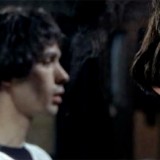
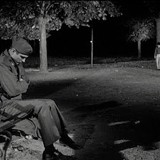
I had no particular expectations from this film. I believe a film synopsis has this ingrained tendency to misrepresent sometimes. In this film Bernardo Bertolucci takes you to his early days in cinema, during the tumultuous late 60’s. It’s highly experimental, with erratic jump cuts, inconsistent plot line, political propaganda (Free Vietnam!) and occasional stylistic scenes that stand aloof just because of their aesthetics. A memorable scene is the giant shadow on a building that kicks away a smaller shadow of the main character.

The film is based on a short story by Dostoyevsky “The Double.” Bertolucci modified it a bit to tell the story of Jacob (Pierre Clémenti) a lonely theater teacher who invents his double, yet a much more extrovert and fierce copy. Cast members you may recognize include Stefania Sandrelli, Sergio Tofano, and Ninetto Davoli (Pasolini’s favorite actor). At the time films required by law to use at least 2 film students, so Bertolucci figured the more the merrier and included dozen students from the Experimental Film Centre in Rome.

I found the film hard to watch because of its incoherent storyboard and over experimentalism. It all made sense though when I watched the interview with Bertolucci in the bonus material. He then reveals the fact that he didn’t find himself connected to the mainstream commercial cinema of the 60’s in Italy – mostly comedy. Instead he opted to follow the French New Wave cinema. So his mission was to contradict the status quo in almost every scene he made.

Another interesting fact he shares, and I wonder if any of you readers can validate, Italian directors at the time never recorded the sound of actors on location – only visuals. They always dubbed it later in the editing room, whereas Bertolucci claims to be the first to capture both visual and audio from his actors. Fascinating!

>Rent this film from Netflix - Only $4.99 a month!