Archive for the 'Italian Cinema' Category

Published by Shlomi Ron on 03 Jul 2008

The Cry - Il Grido (Michelangelo Antonioni - 1957)

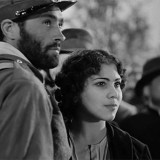
Rejection, alienation, and total abandonment staged in a bleak winter in the Poe valley with constant use of gray landscapes, barren trees, foggish rain and lots of mud all the actors negotiate their way in - provide an apt juxtaposition between the emotional and the physical realities in this masterpiece by Antonioni.

The film tells the story of Aldo (Steve Cochran) a factory worker that after seven years of living with Irma (Alida Valli), having a daughter together, Rosina (Mirna Girardi) - is told the unexpected. With the news of Irma’s husband death in Australia, Aldo logically hopes he now can marry Irma, but she instead shutters his world by revealing that she’s leaving him for another.

After his honor is completely destroyed in a strong scene at the small village piazza - the most sensitive public domain - Aldo decides to leave with Rosina in search for a new life elsewhere. His road trip with his daughter follows the same patterns found in De Sica’s Ladri di biciclette - The Bicycle Thief (1948): constant paternal indifference cracked by fleeting bursts of caring when the well-being of the child is threatened. In the former, the father mind is clouded by the loss of the only instrument needed for making a living, where in the latter - for the loss of the only person he loves.

One of the most rewarding elements of this masterpiece is the soundtrack by Giovanni Fusco. His minimal piano treatments sensibly amplifies the strong premise of Gioavanni’s struggle for the unattainable.

I especially liked the scene when the carriage driver who takes Giovanni and Rosina away from the village - stops the horse to look back at the distancing lights of the village. His observation that the seemingly happy lights may mislead as not all their tenants are as happy - is colored by this introspective piano tune that provides further depth to the words and context.

>Buy this film

Published by Shlomi Ron on 06 Jun 2008

Mediterraneo (Gabriele Salvatores - 1991)

In tempi come questi, la fuga è l’unico mezzo che rimane
per mantenersi vìvi e continuare a sognare.

In times like these, escape is the only mean available
for keeping alive and continue dreaming.

- Henry Laborit

mediterraneoThis film opens up with this quote to set the stage for a simple truth; sometimes we need to go out of our comfort zones, venture into new environments, take a few steps back – to allow us to evaluate from afar our goals and dreams.

Director Gabriele Salvatores brings together a group of soldiers during world war II that as part of their mission OC (Observation & Communication) found themselves deserted on a Greek island. This “bubble existence” on this Homeric island, sheltering the soldiers from the havocs of war brings the troupe to evaluate their personal priorities and their interests in life. For example, lieutenant Montini is connected back to his painting as he remodeled the local church, piccolo Farina finally finds love with Vassilissa, the local prostitute turned Taverna owner.

The film has three distinct parts: the troupe arrival on the island, life on the island, and the reunion on the island. You may consider this as new experience creation, living the experience and finally fast-forwarding into the future by revisiting the experience many years later. The first part deals with the transition of the troupe from the external world of war and their clear duties in it into second part - the idyllic life on the island where out of being disconnected, the soldiers are left to explore their personal truths. Finally, the last part offers another perspective from the advantage of time passed, about what this experience on the island really meant.

All soldiers provide a brilliant performance reflecting diverse backgrounds of different parts of Italy. This mixed bag of characters offers plenty moments of humor and memorable dialogs that will keep you smiling days after watching.

And lastly the film is supported by the enchanting soundtrack by Giancarlo Bigazzi that supports the slow, carefree Mediterranean life on the Island of Oblivion as the soldiers call it. In this sense, the film is both about the essence of escape and at the same time provides escape to viewers following the narrative within the confines of entertainment as an outlet from the mundane. If you’re still unconvinced, well the film won the Academy Award for Best Foreign Language Film in 1991.

The final scene shows sergente Lorusso sitting accompanied by his now older comrades, turning his head back into an unknown point. I’d say this simple head movement is like looking back into the past, saying we shouldn’t wait a lifetime to do the things we really care about.

And you, are you in-tune with your passions?

View Results

Loading ... Loading ...

>Buy this film

Published by Shlomi Ron on 03 May 2008

Light of My Eyes - Luce dei miei occhi (Giuseppe Piccioni - 2001)

Ludovico EinaudiWriting about this film, I decided not to talk about the plot, actors, angles, the director personal story-drivers and focus on just one aspect.

The soundtrack.

More often than not films’ soundtracks receive minor exposure, like the drummer who is sitting in the back where the lead-singer - in our context actors and director - receive all the attention. True, masterpieces from masters like Ennio Morricone usually can’t be ignored, but overall the trend is real.

Think about it, if you remove the soundtrack from a film, all of a sudden the film becomes a recorded outdoor theater performance. Nothing wrong with that, but it will miss an important channel of communication. As you know the director can deliver her message by non-verbal body language, dialogs, visual angles, smart editing, and finally by music to set a specific tone.

Naturally, a lot of how we associate music to positive or negative plot developments is a result of ongoing learning where composers fulfill our expectations using a consistent vocabulary. In this sense, a tense tempo would support a tense scene and not a light slapstick. And there are always deviations from such mainstream approach if we take for example Pasolini’s 1961 Accatone, where seemingly out of place classical music by Bach provides an epic undertone to the violent life of a pimp in Rome’s slums.

In this film, sentiments of utter loneliness and melancholy are sensibly delivered through original music by composer Ludovico Einaudi. The haunting score uses minimalist piano pieces layered over occasional mounting violin crescendos - opens up a rich world of expression and depth. No wonder it won best sound track at the 2002 Italian music awards.

Einaudi’s signature style, as manifested in several other films, offers “an ambient, meditative and often introspective, drawing on minimalism, world music, and contemporary pop” (source: Wikipedia). In this sense, I believe Einaudi’s score is a natural and updated progression to another legendary composer - Giovanni Fusco whose minimalist piano treatments in Antonioni’s 1957 The Cry (Il Grido) paints a similar brooding ambiance.

Einaudi-Piccioni successful collaboration has already started in 2000 with Out of This World (Fuori dal mondo). Some of his prominent albums include Divenire (2007; piano, orchestra) and Una Mattina (2004; piano).

What a pleasant discovery!

>Buy this film

Published by Shlomi Ron on 20 Apr 2008

Big Deal on Madonna Street - I Soliti Ignoti (Mario Monicelli – 1958)

On one hand you can look at this film and say it’s all about men camaraderie in effort to solve an economical problem, and indeed the relationships among the protagonists run the gamut from support, anger, humor, and compassion.

And yet, this film is known as the first to usher the Italian Comedy (Commedia All’Italiana) genre of the late 50’s that lasted until the 70’s. Director Mario Monicelli provides a unique opportunity to see in one film some of the biggest names in Italian cinema; comedian Totò, Vittorio Gassman, Marcello Mastroianni and Claudia Cardinale in a minor role that started her career.

The original US trailer

The film combines stylistic choices from the Italian neorealism, postwar film noir in the US and France, packed with a fine dose of comedy of errors. This mixed bag of styles provides the film with a sense of lightness and parody, specifically about Rififi, a French melodrama that was a big hit in those days in Italy.

I especially liked the jazzy soundtrack by Piero Umiliani that supports the plot’s rapid pace as the mastermind scheme to break a safe of a pawnshop in Rome, is “scientifically” planned and then hilariously executed.

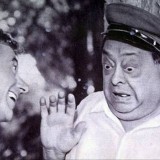
Some of the scenes feels almost like a Pink Panther cartoon, as Cosimo (Memmo Carotenuto) attempts to rob a bank, covers his pistol under a newspaper approaches the counter with the barrel showing and asks the clerk “Do you know what’s that?” hoping to alarm the clerk to submit the cash. But surprisingly, the clerk calmly responds by taking the pistol from him and knowingly declaring the pistol’s model number and make. Cosimo with wide-eye shock immediately scurries away.

The film’s title “I Soliti Ignoti” (The Usual Unknowns) derives from a newspaper jargon that describes crimes executed by unknown criminals. The film had a sequel in 1985, named “Big Deal on Madonna Street – 20 years later,” directed by Amanzio Todini.

>Buy this film

Next »