Published by Shlomi Ron on 01 Sep 2008

Investigation of a Citizen Above Suspicion - Indagine su un cittadino al di sopra di ogni sospetto (Elio Petri - 1970)

Qualunque imposizione faccia su di noi, egli è servo
della Legge e come tale sfugge al giudizio umano
-Kafka

Whatever imposition is brought upon us, it is served
by the law and as such escapes human judgment
-Kafka


Morricone’s pounding soundtrack

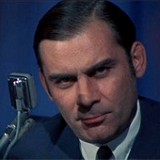
In this Oscar-winning masterpiece by director Elio Petri, a head of homicide department in Rome is testing the boundaries of his authority to override a murder he himself committed. Played by the incredible Gian Maria Volontè, after many roles as the villain in Sergio Leone’s Spaghetti Westerns, in this film you’d be amazed by his transformation into an urban mastermind of a murder that no matter how many clues he leaves for his own team to find and outright admissions he makes - his powerful position provides the ultimate shelter.

The film boasts a signature soundtrack by maestro Ennio Morricone, that provides a tense texture with persistent tempo to support on one hand the authoritative police inspector as he toys with his team, the media and even a harmless passerby, and the ongoing investigation - on the other. Interestingly, the rationale for this wry game, as the inspector puts it, is not to mislead his team but to prove his intact above-suspicion status. Above is a fine sample of this classic score.

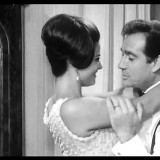
Worth noting also is the solid delivery of Florinda Bolkan, in the role of Augusta Terzi, the inspector’s lover that can exude both sensual vulnerability, and determination that can easily make cracks in the otherwise bullet-proof power presentation of the inspector, thus bringing him into utter submission. In essence, her role plays a focal point for the whole plot as she constantly populates the inspector’s thoughts, triggering flashbacks to their shared wild relationship.

This photo is a good capture of her intoxicating power over the inspector, pulling him into her web of mind games, teases that leads into a final destruction, while all along using his power as police inspector to supply endless contexts for role-playing the victim vs. the authority:

Such a bold social criticism of corrupted officials you will also find in the earlier work of Francesco Rosi’s Hands over the City - Le Mani Sulla Città (1963). You can see even the use of the same imagery as the potent official sitting in his desk with a background map of his jurisdiction:

Gian Maria Volontè as the powerful police inspector

Rod Steiger as the ruthless, power-hungry real-estate speculator

Published by Shlomi Ron on 25 May 2007

Christ Stopped At Eboli - Cristo si è Fermato a Eboli (Francesco Rosi - 1979)

In this film, Francesco Rosi tells the story of painter Carlo Levi, an anti-fascist activist that was arrested in Turin in 1935 and was sent by Mussolini to the remote town of Gagliano (invented name) - in what is known today as Basilicata.

Christ stopped at Eboli

If you ignore the historical context of this film and focus on the quaint ambiance of a small village in Sicily, where old customs never changed in the past 3000 years – then you’re in for a remarkable journey into Italian peasantry culture.

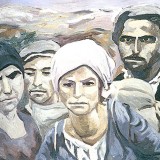
The film vividly depicts the interactions of Levi (Gian Maria Volontè) with the locals from a perspective of an outsider, which is nicely aligned with viewers watching the film. The camera work is superb, inquisitively exploring the village and its people, while applying layered natural textures. If you look closely you’ll notice the intricate tapestry of objects and people that if paused would appear as a timeless oil painting.

I especially liked the dinner scene when Levi meets the local tax collector who vehemently shares the woes of his job collecting tax from the poor peasants. His only salvation is playing the clarinet. You can clearly identify with him and the burden of his “thankless job.” It’s a solid presentation of humanity and compassion.

Pierro Piccioni, Rosi’s long-time collaborator, provides a tantalizing soundtrack that explores the vast boundaries of the timeless existence of peasant culture compared to the modern world Levi is coming from. You can clearly feel the wide expanse of time and space and the futility in trying to bridge the two worlds. Listen to a fine sample here and you’ll hear what I mean.

In case you wondered, the film’s title “Christ Stopped at Eboli” is in fact an Italian expression to convey that old ways and belief system held by the villagers are stronger than their Christianity.

>Rent this film from Netflix - Only $4.99 a month!

>Buy this film