Archive for December, 2006

Published by Shlomi Ron on 30 Dec 2006

The Crush - La Cotta (Ermanno Olmi - 1967)

Have plans for New Year? Not yet? Well…now you do!

Get your loved-one or no one and celebrate it with The Crush, an adorable short film (49 minutes) by Ermanno Olmi. The kind people at Criterion Collection included this fine featurette in the DVD of Il Posto, another gem I have recently covered.

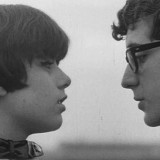
The film tells the story of Andrea a sensitive teenage boy who is infatuated with a girl and his adventures on New Year’s Eve. Beyond the clever story, I liked the documentary elements that from soon-to-be 2007 - look extremely telling. On one hand technology has clearly progressed since the late 60’s, yet teenage nature remains constant.

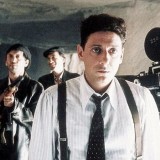
The CrushItaly back then experienced an unprecedented economic boom that was characterized by the transition from relying on agriculture to industrialization. Against this backdrop, Andrea presents his “Industrial Approach” for picking up girls. In today’s MySpace age, he probably would have called it his “Social Networking Approach.” Unlike other guys who act emotional or disinterested and waste time in lengthy courtships, his method, he claims, is far more efficient. And he demonstrates it to his buddies, when he makes a list with names of all the boys where girls simply pick the boy they’re interested in making out with. Sounds a lot like Speed Dating to me…

Another example that effectively illustrates this interplay between available cool technologies and timeless teenage foibles is the party scene. After the above described list is formed the group gathers at one of the boys’ houses. The core attraction is naturally gadgetry dressed up as a fancy stereo system, the group is enamored with listening to the dynamic music of Strawinsky. And then like a YouTube omen, Andrea finds a movie camera and starts directing the group for a romantic scene. Some things never change.

The soundtrack boasts a cheerful 60’s Rock ‘n’ Roll tune that perfectly fits this sweet mix of teen innocence and senseless infatuations - a sure recipe to bring back memories of your high school parties. Happy New Year!

>Buy this film

Published by Shlomi Ron on 25 Dec 2006

Partner (Bernardo Bertolucci - 1968)

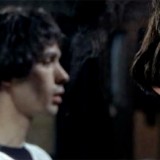
I had no particular expectations from this film. I believe a film synopsis has this ingrained tendency to misrepresent sometimes. In this film Bernardo Bertolucci takes you to his early days in cinema, during the tumultuous late 60’s. It’s highly experimental, with erratic jump cuts, inconsistent plot line, political propaganda (Free Vietnam!) and occasional stylistic scenes that stand aloof just because of their aesthetics. A memorable scene is the giant shadow on a building that kicks away a smaller shadow of the main character.

The film is based on a short story by Dostoyevsky “The Double.” Bertolucci modified it a bit to tell the story of Jacob (Pierre Clémenti) a lonely theater teacher who invents his double, yet a much more extrovert and fierce copy. Cast members you may recognize include Stefania Sandrelli, Sergio Tofano, and Ninetto Davoli (Pasolini’s favorite actor). At the time films required by law to use at least 2 film students, so Bertolucci figured the more the merrier and included dozen students from the Experimental Film Centre in Rome.

I found the film hard to watch because of its incoherent storyboard and over experimentalism. It all made sense though when I watched the interview with Bertolucci in the bonus material. He then reveals the fact that he didn’t find himself connected to the mainstream commercial cinema of the 60’s in Italy – mostly comedy. Instead he opted to follow the French New Wave cinema. So his mission was to contradict the status quo in almost every scene he made.

Another interesting fact he shares, and I wonder if any of you readers can validate, Italian directors at the time never recorded the sound of actors on location – only visuals. They always dubbed it later in the editing room, whereas Bertolucci claims to be the first to capture both visual and audio from his actors. Fascinating!

Published by Shlomi Ron on 24 Dec 2006

The Job - Il Posto (Ermanno Olmi - 1961)

Do you remember your first job interview and your mom protectively cautioning you, don’t mess up this could be a great opportunity, practically work for life? Or an important exam you took at school and the following stress afterwards when your friends commeting - that was easy (no it wasn’t!), prodding you the correct answer was 24, right?

In this film, Ermanno Olmi effectively captures the world of a young guy from the province who comes to the big city, Milan, in his quest to get a job in a large corporation. Olmi does a fantastic job painting these fragile feelings of inexperience, naivety, and anxiety against the rigid ideas of the importance of finding work, but not just any work – work for life (aberration in today’s job market), family responsibilities, and corporate dominance over the lives of employees inside and outside the office.

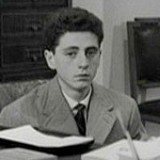
Il PostoThe first half of the film revolves largely around the intense, and at times comic interview process young Domenico has to go through; writing an essay, solving a math problem and coiling embarrassingly during a psychometric interview. Dialogs are short as Olmi skillfuly leverages facial expressions as a powerful communication tool. There is a scene where Domenico (Sandro Panseri) and his test mate Antonietta (Loredana Detto), are standing in a coffee shop, finishing up their drinks and looking for cues what to do with their cups, identifying an old lady next to them, in the same stage, that decidedly leaves the cup on the table – grinning to each other (aha, that’s how you do it!) they put their cups on the table too and leave the shop. Not a word was spoken, but a simple human effort to make sense of a vague context.

Neorealist films are characterized by use of non-professional actors. They are shot almost exclusively on location, mostly in poor neighborhoods and in the countryside. Neorealism was first introduced in 1945 with Roma, Città Aperta (Rome, Open City) by Roberto Rossellini. In this film, Olmi religiously follows this model. For example, all the other job candidates that appeared in the film were non-professional actors that were attending a technical school at the time, and actively searching for a job. For Olmi it was cardinal that their facial expressions (his favorite communication tool) were authentically aligned with the film’s theme.

The other half of the film follows Domenico’s experience on the job and the intricate meanings of working for a big company in Milan in the 60’s. Extremely stretched, yes but still relevant; The big boss, the office politics, the company holiday party, the lunch break, and payday – themes we can all relate to. In this sense, some may say this film is a unique precursor to the successful TV show “The Office.”

>Buy this film

Published by Victor on 23 Dec 2006

The Star Maker - Uomo delle Stelle (Giuseppe Tornatore - 1995)

This was the first film we saw in our House of Italy series. The series’ producers (myself & two friends) spent a bit of time deciding what should be their first film & chose this one not only for its filmic qualities but also because it was about movie-making. It wasn’t until after our discussion that I began to realize it was really about making honest art, not just STARS.

A friend wrote me later with some more questions, which I’ll include here, but his questions pointed me to exactly those parts of the movie which opened up the whole thing for me.

As I watched the movie, I was enchanted by the story, the phony interviews, the various characters, especially the con guy Joe. And when it was over I was ready for a good discussion, but one of our members, a lady originally from Sicily jumped up and condemned us for showing a film that portrayed Sicily as dirty, broken, primitive. We three organizers were completely dumbfounded, but I was pretty happy that anyone would feel so comfortable in our series that she could produce her own brand of fire & brimstone. This sort of cut short most other discussion, however. And so I was pretty wild about sharing my own opinions then.

So when I received my friend’s email, I pretty much uncorked a pretty bubbly brew of observations and opinions. For now I’ll just post my friend’s note to me so that the questions can be considered by anyone who has seen the movie. And if you haven’t seen it, I really recommend it. It is a wonderful, wise and witty film.

Here’s the email:

An imposter travels to little towns in a truck providing an entertainment to its simple people. He falls in love with a sweet girl who, because of his dishonest behavior, loses her mind. Sounds like La Strada–a great film.

The differences are what made this, for me, a very good movie.

The people of the town, learning their lines from Gone with the Wind, was humorous–there was no humor in La Strada.

Joe Morelli, unlike Zampanone, but like most charlatans, had an element of charm, I found him likable.

The townspeople recounting their stories in front of the camera was original and beautiful.

What I don’t understand, are the two sex scenes. They were needed for the film to work, but why show all that pumping to adults who know how it works? Does this sell tickets?

The other scene that didn’t seem to fit, with the “rich” thieves in a bombed out town, seemed contrived.

What do you think?

The next post

>Buy this film