Archive for April, 2007

Published by Shlomi Ron on 24 Apr 2007

The White Sheik - Lo Sceicco Bianco (Federico Fellini - 1952)

Are you a Yankee fan? A Madonna die-hard? Or better yet a Sanjaya zealot?

By having sports or entertainment idols we develop a perfect extension of our identity. You might say, an aspired identity full of good looks, talents and fortunes. In this parallel worlds dynamics, whatever happens to your subject of admiration in their world is immediately mirrored to your life. Since everyone associate you with a recent win of your team or artist, now you’ve become a winner too. And yes, the opposite is also true…

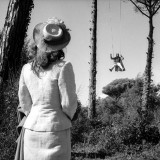
The White SheikFederico Fellini’s first film as a director delves deeper into the implications of idolizing heros of the Fumetti – photo novels – that were very popular during the 40’s in Italy.

The film, a clever comedy, tells the story of a newly wed couple that arrives to Rome to meet the husband’s relatives.

What the husband Ivan (Leopoldo Trieste) doesn’t know is that his wife, Wanda (Brunella Bovo), a Fumetti fan had been exchanging letters with the White Sheik (Alberto Sordi), her favorite Fumetti hero, who invites her to meet him in Rome.

The hoplessly enamored Wanda ends up on a remote set location 30 km away from Rome. In essence, trashing her husband’s carefully planned visit, leaving him worried-sick and in constant need of excusing her absence to his relatives.

The result is a comic, yet a touching story, in which Fellini also introduces us to Cabiria, the compassionate prostitute who consoles poor Ivan, played by Fellini’s wife Giulietta Masina. Her fine performance serves as the basis for her lead role in 1957 Nights of Cabiria.

I especially like the funny wide eye-popping routine that both Ivan and Wanda employ. Yet, each for two different ends. Ivan for expressing shock transformed into anger over the disappearance of his wife. And Wanda for experessing awe morphed into a dreamy look when she meets the White Sheik (Sordi) for the first time. She made it! She crossed the boundaries of her mandane reality and made it to her hero’s fantasy world.

The film is blessed by the sensitive soundtrack of Maestro Nino Rota, Fellini’s loyal collaborator throughout his film career. The circus-like music during the beach scene that serves as set location for filming the photo novel - is strong and whimsical.

This scene is important because it demonstrates the fake boundaries between reality and fantasy, when creating entertainment content. The galore of celebrities on camera is flanked by their human vulnarability munching on a sandwich during a lunch break or when The White Sheik (Sordi) is reduced to tears after fighting with his wife.

The film’s message is clear. We all like to carry various idols - our perfect alter-egos that may compensate for our human imperfections. But in reality, obviously no one is perfect including these idols that the media is daily selling us basking in eternal stardust.

Who is/was your White Sheik?

>Buy this film

Published by Shlomi Ron on 01 Apr 2007

Too Bad She’s Bad – Peccato che sia una Canaglia (Alessandro Blasetti - 1954)

Looking to start the Spring with a smile?

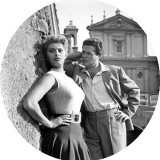
Director Alessandro Blasetti is here to take you back to 1954 Rome in a brilliant comedy featuring signature performances by 20-years old Sophia Loren, Marcello Mastroianni and Vittorio De Sica. The film is a fine example of the Italian comedy (commedia all’italiana) genre of the 50’s-60’s known for masterpieces by Mario Monicelli, Pietro Germi and others that self-explored the social and economic changes affecting post-war Italian society.

Sophia Loren

The chemistry between young Loren and Mastroianni is phenomenal as well as De Sica’s portrayal of Loren’s father and head of a family of thieves. Mastroianni plays a naive taxi driver that means well, but keeps falling for the swindling charms of Loren and her fast-talking.

My favorite scenes are those of Mastroianni driving his taxi chastising himself after realizing he fell for yet another sham by Loren. His range of facial expressions and self-loathing are hilarious.

Beyond the dream-team cast, the film boasts a catchy swing tune that will keep you humming bingo bango bongo… days after watching the film. Interestingly, the song written by Renzo Arbore was originally made in the 40’s as a protest against the fascist colonialism.

Here are the words to help you out with the chorus:

Oh bongo bongo bongo
stare bene solo al Congo
non mi muovo no no
bingo bango bengo
molte scuse ma non vengo
io rimango qui
no bono scarpe strette saponette
treni e tassi’
ma con questa sveglia al collo
star bene qui

>Buy this film