
Published by Shlomi Ron on 01 Sep 2008

Investigation of a Citizen Above Suspicion - Indagine su un cittadino al di sopra di ogni sospetto (Elio Petri - 1970)

Qualunque imposizione faccia su di noi, egli è servo
della Legge e come tale sfugge al giudizio umano
-Kafka

Whatever imposition is brought upon us, it is served
by the law and as such escapes human judgment
-Kafka


Morricone’s pounding soundtrack

In this Oscar-winning masterpiece by director Elio Petri, a head of homicide department in Rome is testing the boundaries of his authority to override a murder he himself committed. Played by the incredible Gian Maria Volontè, after many roles as the villain in Sergio Leone’s Spaghetti Westerns, in this film you’d be amazed by his transformation into an urban mastermind of a murder that no matter how many clues he leaves for his own team to find and outright admissions he makes - his powerful position provides the ultimate shelter.

The film boasts a signature soundtrack by maestro Ennio Morricone, that provides a tense texture with persistent tempo to support on one hand the authoritative police inspector as he toys with his team, the media and even a harmless passerby, and the ongoing investigation - on the other. Interestingly, the rationale for this wry game, as the inspector puts it, is not to mislead his team but to prove his intact above-suspicion status. Above is a fine sample of this classic score.

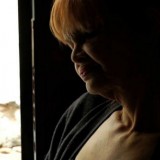
Worth noting also is the solid delivery of Florinda Bolkan, in the role of Augusta Terzi, the inspector’s lover that can exude both sensual vulnerability, and determination that can easily make cracks in the otherwise bullet-proof power presentation of the inspector, thus bringing him into utter submission. In essence, her role plays a focal point for the whole plot as she constantly populates the inspector’s thoughts, triggering flashbacks to their shared wild relationship.

This photo is a good capture of her intoxicating power over the inspector, pulling him into her web of mind games, teases that leads into a final destruction, while all along using his power as police inspector to supply endless contexts for role-playing the victim vs. the authority:

Such a bold social criticism of corrupted officials you will also find in the earlier work of Francesco Rosi’s Hands over the City - Le Mani Sulla Città (1963). You can see even the use of the same imagery as the potent official sitting in his desk with a background map of his jurisdiction:

Gian Maria Volontè as the powerful police inspector

Rod Steiger as the ruthless, power-hungry real-estate speculator

Published by Laura Bianconcini on 12 Aug 2008

Sonetaula (Salvatore Mereu - 2008)

From Los Angeles Independent Festival in collaboration with the Italian Cultural Institute of Los Angeles.

Great excitement for this movie which is again from and about Sardinia. The fact that the director was there presenting the film and holding the discussion makes it even more interesting.

YouTube Preview Image

Sonetaula is a book by Giuseppe Fiori that he recently re-wrote and shortened. It is set up in a decade between 1938 and 1948 (more or less) in the island of Sardinia, inland, in the shepherd’s most true world.

Sonetaula is the name of our character, in reality a nick name, which means sound of wood, since he was very skinny.

Sonetaula follows the story of many other children in a typical village of Sardinia. He has to help the father to tend his flock, because he has to go to work in a factory in Italy, he would make more money, he said. Poor people, after war, hoping to have a chance to change their lives. However, we will discover that this is not the truth.

Sonetaula is a young boy victim of his culture. In the mountain, in the cold, in the freezing solitude of woods and sheep, one day, founding out that his friends stole one of his sheep he goes and kills 20 of theirs.

It’s a revenge imposed by the shepherd culture, where you have to protect what is yours at all costs and teach others that you are stronger.

This act will mark his life and his future won’t have chances for salvation, unfortunately. Rejected now by a people that is trying to emerge from its millenary absence from the evolution, that is rejecting its archaic pastoral existence rules, Sonetaula is left alone with his life of bandit.

Maybe only 23 or 24 years old, Sonetaula, unable to trust and surrender to justice because too far from his known living codes, he plays his last card making an escape agreement with an ‘important person’, the ingegnere. A person reasonably trusted because of his high social position that, instead, has other interests than saving a poor shepherd life.

This movie has of course the charm of a neorealist movie. They took one year to shoot it, in real places, with real people, I mean non professional actors, and with real seasons, the director says. A photography very effective though, with major technological touches, maybe too many to be authentically neorealist. Nevertheless, valuable for its strong ability to make looks, silences, thoughts, feelings, talk.

However, Salvatore Mereu is not giving his true poetry, like he did in Ballo a Tre Passi. Fair enough, we know he will again.

Published by Shlomi Ron on 27 Jul 2008

Mafioso (Alberto Lattuada - 1962)

YouTube Preview Image

US Trailer

It’s that great excitement you get when you come across a truly rewarding film by a director you have never seen much of his work, when everything seems to work exactly how you’d want it to be. And Mafioso by Neorealist director, Alberto Lattuada is simply that perfectly fun film. It’s the same sad story, these cinematic gems have limited distribution anywhere and are hard to come by. Unless the film is within the programming roadmap of the great people at The Criterion Collection, which is the case here.

You may have heard about Alberto Lattuda through his collaboration with Federico Fellini on Lights of Variety (Luci del varietà -1950), but his long and widely acclaimed work is known for his unique sensibilities of telling a simple story of the individual without compromise. “A good director is the one that can keep his audience nailed to their seats. Because the moment you see someone leaves the room that means the director didn’t do a good job like a scene that went too long…” Said Lattuada in a rare interview in the bonus section of this DVD.

This film brings one of Italy’s greatest actors, Alberto Sordi, to tell the story of Nino who has the perfect life – great job, wonderful family – who lives in Milan. Simply an ideal poster of the early 60’s when Italy has experienced the Economic Miracle (Boom Economico) with massive economic growth, characterized by the transition from relying on agriculture to industrialization.

You might want to think about this industrialization having the same impact as the Internet and the Digital Age of today. In this sense, you can see the portrayal of Nino’s life in Milan almost as the same period prime-time animated series The Jetsons - who lives in a futuristic utopia, using all kinds of gadgetry in their home. The same you find here in a fun scene when Nino is shaving, while at the same time cleaning his shoes – using all kinds of machinery.

And like today’s reality shows that bring together two complete opposite characters for us to watch the ricochets – Nino takes his ultra-modern family to visit his family in a small Sicilian village for the first time. The interesting element in this film is Lattuada’s unique style of moving the audience from comedy to drama, from Milan to Sicily to New York and back again. All in a fast-paced plot where every scene, camera angle and soundtrack is carefully calculated.

The film is augmented by the pounding score of Piero Piccioni, glimpses of which you can sample from the above trailer; on one hand, depicting a man’s warm-loving admiration to his family, and his hometown with all the memories and traditions it represents. However flanked by a dramatic score that emphasizes the enigmatic duality of an ordinary life, even robotic to some extent, yet with old storms looming. The sense that what you see isn’t always telling. It’s about the concept of displacement and the need to comply with your roots in order to keep your family safe millions worlds apart. To that mix Piccioni adds light swing tunes, specifically in the public space scenes in the village.

The opening and closing scenes vividly show the monstrous industrial machines that create metal objects and pass them along the assembly line. Could it be that this is a metaphor to Nino’s personality? Originally crafted in Sicily, passed along to Milan, yet still carries those base Sicilian attributes?

Think about it the next time you’re traveling back to your old hometown. How much of this place contributed to who you are today?

>Rent this film from Netflix - Only $4.99 a month!

>Buy this film

Published by Shlomi Ron on 03 Jul 2008

The Outcry - Il Grido (Michelangelo Antonioni - 1957)

Rejection, alienation, and total abandonment staged in a bleak winter in the Poe valley with constant use of gray landscapes, barren trees, foggish rain and lots of mud all the actors negotiate their way in - provide an apt juxtaposition between the emotional and the physical realities in this masterpiece by Antonioni.

The film tells the story of Aldo (Steve Cochran) a factory worker that after seven years of living with Irma (Alida Valli), having a daughter together, Rosina (Mirna Girardi) - is told the unexpected. With the news of Irma’s husband death in Australia, Aldo logically hopes he now can marry Irma, but she instead shutters his world by revealing that she’s leaving him for another.

After his honor is completely tarnished in a strong scene at the small village piazza - the most sensitive public domain - Aldo decides to leave with Rosina in search for a new life elsewhere. His road trip with his daughter follows the same patterns found in De Sica’s Ladri di biciclette - The Bicycle Thief (1948): constant paternal indifference cracked by fleeting bursts of caring when the well-being of the child is threatened. In the former, the father mind is clouded by the loss of the only instrument needed for making a living, where in the latter - for the loss of the only person he loves.

One of the most rewarding elements of this masterpiece is the soundtrack by Giovanni Fusco. His minimal piano treatments sensibly amplifies the strong premise of Gioavanni’s struggle for the unattainable.

I especially liked the scene when the carriage driver who takes Giovanni and Rosina away from the village - stops the horse to look back at the distancing lights of the village. His observation that the seemingly happy lights may mislead as not all their tenants are as happy - is colored by this introspective piano tune that provides further depth to the words and context.

>Rent this film from Netflix - Only $4.99 a month!

>Buy this film

« Prev - Next »