Archive for the 'Drama' Category

Published by Shlomi Ron on 03 Feb 2008

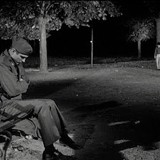
Tickets (Ermanno Olmi, Abbas Kiarostami, Ken Loach - 2005)

You better leave now if you want to catch this train.

If we do a good job for this worldwide company, we’ll be on the gravy train for more projects.

Sorry, for this class the train has already left the station - registration is over.

Thanks, but you’ve just interrupted my train of thoughts.

ticketsTrains offer a rich canvas for conveying many human contexts, challenges, disappointments and hopes. So it’s only natural that cinema would utilize this eclectic locomotive in various ways. And indeed, trains and train stations play a highly emotional role in Italian cinema and beyond. The dramatic sense of departure between loved ones towards the unknown future (I Vitelloni, Federico Fellini - 1953), the arrival to a new place and the constant search for the ever-waiting relative (Rocco and his Brothers – Luchino Visconti - 1960) – and many more.

Whereas in most films the train environment appears only in a few scenes to underscore a particular emotional development, then in this film the train is brought front and center and functions as the constant backdrop for the plot throughout the whole film.

Moreover, this film provide a cross-cultural triptych of three prominent directors;tickets Ermanno Olmi (Italy), Abbas Kiarostami (Iran), and Ken Loach (Britain). Each brings his own artistic sensibilities to weave a story with characters riding the train from central Europe to Rome. The beauty of the film is how these characters transition from one story driven by one director to another. For that matter, it’s definitely worth viewing the Behind the Scenes bonus content to appreciate the careful planning that was involved in weaving these three independent plots into one cohesive artwork.

Often trains’ linear nature represent a metaphor for life’s winding rail where each station is another milestone en route to a final destination, that once accomplished nirvana supposedly descends. The same logic is also apparent in this film where Olmi, leveraging his signature style of using present to past flashbacks (see The Enagaged - I Fidanzati – 1963), Kiarostami by creating a somber brooding mood about past events and Loach by planting series of human miscommunications that unravel upon arrival to Rome.

No doubt, trains are vibrant microcosms where ephemeral human stories are produced every day. Think about it the next time you ride the train…

>Rent this film from Netflix - Only $4.99 a month!

>Buy this film

Published by Shlomi Ron on 15 Jan 2008

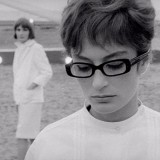
Remember Me My Love - Ricordati di me (Gabriele Muccino - 2003)

YouTube Preview Image

The film’s theme song by Elisa

Is Italian cinema dead?

Not by a long shot. Yes, current Italian filmmakers have been facing this incredible challenge of reinventing Italian cinema in the face of its grand history. No matter how you slice it, it could definitely be tough surpassing the Fellinis or the De Sicas of the world. Yet, different times with different audiences call for fresh new perspectives and new cinematic ideas.

remember me my love

And that’s exactly why this film by Gabriele Muccino, is such a great delight. It opens a fresh new window to what modern Italy looks like today. In the center of this film is the story of a normal, yet dysfunctional family where the fast pace of modern life erodes the natural family ties. Carlo, the husband (Fabrizio Bentivoglio) is experiencing a midlife crisis, finds his job boring and slowly digresses to reignite an old flame, played beautifully by Monica Bellucci.

If Carlo functions on a slow always-brooding wavelength, Giulia, his wife (Laura Morante) is a ball of fire, always in a hurry, works as a teacher, but thinks her true calling is acting, tries it but always self-doubting herself.

Their kids Valentina (Nicoletta Romanoff), the ultimate teen who is always self-absorbed, (practically glued to her mirror) and on a mission to get into showbiz no matter what it takes. Paolo (Silvio Muccino, the director’s real-life brother), her brother, is a confused adolescent that feels like the family loser.

remember me my loveWhen you tie all these characters together, it seems like they have become so much apart of each other, each gliding in his own orbit as if they’re merely strangers renting rooms in the same apartment. In this sense, the director does an excellent job of creating a sense of alienation and discontent.

The plot moves briskly and at times it almost feels like switching TV channels; you start with multiple stories revolving around each character and then keep moving from one story development to the next until a unified development point brings all these sub-plots to conclusion.

The film provides an excellent capture of the dreams, pitfalls and successes of a liberal, middle-class family that always needs to renegotiate its reason for existence. Superb!

>Rent this film from Netflix - Only $4.99 a month!

>Buy this film

Published by Shlomi Ron on 24 Dec 2007

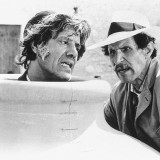
Rome Free City - Roma Città Libera (Marcello Pagliero - 1946)

YouTube Preview Image

Where have you been during winter 1946?

Since some of us would likely say - nowhere, here is a time capsule from that period in Rome, right after WW2 is over. The American GI’s are still in town and the people wake up into the rough realities of making a living in a battered economy.

The film is a fine example of a lighter take on the neorealism genre, borrowing from the success of its emblematic predecessor - Roma Citta Aperta by Roberto Rossellini, made a year earlier. In fact, both Marcello Pagliero, the director of this film, and Nando Bruno – both played in Roma Citta Aperta.

The film uses themes of daily hardships in a much lighter tone, illustrating variety of characters that coincide one rainy night in an intricate plot that moves a pearl necklace from hand to hand.

From Andrea Checchi, who contemplates suicide over the departure of his treacherous girlfriend (Marisa Merlini), the struggling typist (Valentina Cortese) who can’t pay her rent and opts to street life, the petty thief with a good heart (Nando Bruno). And the dignified minister who lost his memory and keeps asking everyone “do you recognize me?” played beautifully by Vittorio de Sica. Friendships are formed quickly to navigate the criminal elements the night summons. Only at dawn the picture becomes clearer as things are never like they initially seem. That’s where the film extra title comes handy - La Notte Porta Consiglio - The Night Gives Wisdom.

This plot is supported by an endless chain of cigarette-smoking, alcohol/espresso-drinking, you would recognize the theme song composed by maestro Nino Rota. He then reused it in Fellini’s “I Vitelloni.” The music veers from a somber pessimistic flair to a whimsical, comic tone with a promise that no matter what, things will eventually work out fine.

Looking through another prism, with today’s Internet gold rush ignited by twenty something entrepreneurs – this film too was created from nothing by twenty something pioneers with a burning fire to explore the new medium. In fact, this is Pagliero’s first film. It didn’t find major success, but nevertheless it’s a fantastic gem with all the time-specific trappings of people, challenges, culture and Rome before its piazzas were transformed into car garages…

>Rent this film from Netflix - Only $4.99 a month!

>Buy this film

Published by Shlomi Ron on 15 Dec 2007

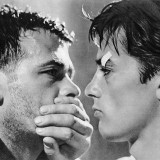
Nights of Cabiria – Le Notti di Cabiria (Federico Fellini – 1957)

nights of cabiriaThis is the last film of Fellini’s second triliogy that started with La Strada (1954) and Il Bidone (1955). A trilogy dedicated to themes of people living on the margins of society (street dancer, swindler and a prostitute) that despite their rough lives eventually experience radical life change, call it redemption.

In this film, Fellini brings back Cabiria, the prostitute with the heart of gold played beautifully by his wife Giulietta Masina. Fellini has already presented us with the role of Cabiria in his 1952 film The White Sheik. There Cabiria is consoling poor Ivan at the piazza late at night after he lost hope of finding his wife.

After the dismal reviews both critically and in the box office for his previous film Il Bidone (1952), Fellini comes back two years later with the proposal of The Nights of Cabiria and receives the cold shoulder everywhere he turns. Practically, the film is about a life of a prostitute in Rome – a tough sell in 1950’s Italy. The film was eventually produced by the one and only - Dino de Laurentiis.

The film tells the story of Cabiria a Roman prostitute with an intricate personality. On one hand she’s the tough street-smart taking no pimp to manage her affairs, constantly bragging about her independence, owning her own home. On the other, she’s very fragile, naïve and desperately romantic who really wants to change her life.

Throughout the film Fellini shows us how swindlers take advantage of Cabiria; the film opens when she was thrown into the Tiber river after being mugged, and then another shady type named Oscar is fooling her with the illusion of a true love only to rob her of all her life savings.

Interestingly, there is one scene in the film that was just recently added since the church objected to include it in the original release. The scene is known as The Man with the Sack, showing a man with a big sack going from one cave to another, giving out food for the poor residents of these makeshift shelters. The church objection rationale is clear – that should have been the church role.

Another scene, shows Cabiria visiting a sacred place with her friends where they all pay their dues for a chance to be redeemed and have a life changing experience. After the service is over, during which Cabiria was deeply moved – there is a lovely scene where Cabiria and her friends are having a picnic and Cabiria suddenly realizes that nobody has really changed they’re all the same including the cripple who joined them.

Fellini provides us with a clear message about the role of the church that operates as a dream machine or some kind of lottery where you pay a ticket for a chance to win a better life. But as we know odds are slim. Cabiria’s friends accept that logic, but not Cabiria who sees through it all and in a way is asking for a refund.

nights of cabiria

The primary message of the film is simple, yet powerful. You would think that after Cabiria has been duped so many times, human trust is practically non-existent – she would break down. Yet, Fellini existential and optimistic view, shows us that redemption does not rely on external sources, but is coming from within oneself.

Simply put, YOU control your emotional climate and destination.

>Rent this film from Netflix - Only $4.99 a month!

>Buy this film

« Prev - Next »