Archive for the 'Romance' Category

Published by Shlomi Ron on 31 Aug 2007

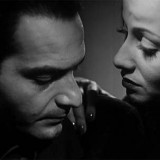
Story of a Love Affair - Cronaca di un amore (Michelangelo Antonioni - 1950)

Rainy dark streets, unfulfilled love, alienated ambience, restless camera movement and mimialistic soundtrack come together here in Michelangelo Antonioni’s first full-length feature film.

With the recent passing of this incredible director that has largely shaped the course of Italian cinema - it is fascinating to go back to the early years and observe the origin of his artistic growth.

Like Antonioni’s future films such as The Girlfriends (1955) and L’avventura (1960), the story revolves around the intricacies of Italy’s upper social class. Paola (Lucia Bosé) is being investigated by Enrico (Ferdinando Sarmi), her jealous industrialist husband about her past life in her native town Ferrara. The story brings together Paola and her former lover Guido (Massimo Girotti) that hide their secret as the investigation progresses.

Antonioni provides two story lines; that of the investigator activity piecing together clues about Paola and her past friends, and the relationship between Paola and Guido that reacts to developments in the investigation. The result is a gradual tension build-up that is characterized by the couple constant fear of being followed. Giovanni Fusco’s minimalistic and at times chaotic sax and piano grim melodies effectively paint these two plot lines into their inevitable crossing.

story of a love affair

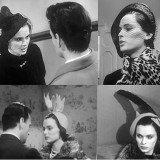
What I found most interesting is the prominent use of fashion to communicate feelings of alienation and masking. Beyond the incredible costume design work done by Ferdinando Sarmi (also plays Enrico in the film - the only film he ever did!), what specifcally caught my eye was the four different hats Paola wears.

Each as you can see, seems to tell its own story. For example, the tilted hat was used in the elevator scene may hint of the past accident of the couple mutual friend who fell in the elevator tunnel. The flame-like hat with its fiery expression was worn when the couple first discusses their plan to murder Paola’s husband.

Another testament to Antonioni’s phenomenal command of various media vehicles to tell a story.

>Rent this film from Netflix - Only $4.99 a month!

>Buy this film

Published by Shlomi Ron on 13 Jul 2007

Swept Away – Travolti da un insolito destino nell’azzurro mare d’agosto (Lina Wertmüller – 1974)

Summertime and the living is easy…so why not enjoy a summer masterpiece from Lina Wertmüller who started her career as an assistant director in Fellini’s 1962 film 81/2? The film, is by no means your typical summer movie, weaves together issues of sex, politics, male-female, poor-rich, relationships into comedy turned drama.

Swept Away

Swept away by an unusual destiny in the blue sea of August is the full title in Italian. A typical Wertmüller whimsical film-naming style that also got her a Guinness record for another film with 179 characters! Quite long, but it perfectly captures the essence of the sweeping and unexpected dramatic change that occurs in otherwise serene, picture-perfect summer vacation.

Aboard a yacht gliding in the crystal deep blue waters of the Mediterranean, a party of rich people is enjoying the good life. Raffaella (Mariangela Melato), the rich and beautiful lady from the north is driving everybody crazy with her ongoing politics vitriol and her constant bossing around the scruffy Sicilian Gennarino (Giancarlo Giannini), the crewman. If she’s not complaining about the overcooked pasta, the stale coffee she’s demanding poor Gennarino to change his shirt more often when serving her. Pazienza (patience) utters Gennarino after every humiliation as he reluctantly accepts his role.

The chairs are turned when Gennarino and Raffaella are shipwrecked on an inhabited island as Rafellea realizes she needs Gennarino in order to survive. This relationship transformation includes a few violent scenes that Gennarino unleashes to express ages of exploitation done by everything, in his mind Raffaella and the rich represent.

Some critiques found this bold expression of women subjugation over the top; others complimented the courage of the director - especially as a woman - to deal with such delicate gender issues with no shortcuts.

I don’t like it either, but I believe this usage of radicality is important because it effectively demonstrates the long road it takes to bring these two world-apart strangers from the realm of the impossible on the Swept Away yacht to the realm of the possible, yielding a moving love story on the island.

The premise of the film is simple. Within society’s boundaries roles and class differences are clearly defined. However once you place these complete opposite characters outside their comfort zones, these rules don’t apply anymore. Instead it brings out the opportunity to get closer and learn more about our common humanity.

Yet, would that transformation happen if Raffaella were able to take care of herself on the island without Gennarino’s help? My guess is yes. At the end of the day, no matter how materially satiated we are, we all need the human connection.

>Rent this film from Netflix - Only $4.99 a month!

>Buy this film

Published by Shlomi Ron on 18 Jun 2007

The Girlfriends – Le Amiche (Michelangelo Antonioni - 1955)

Do you see your friends as sources of support or anxiety?

More often than not, friendships provide us with mirrors through which we can interpret and validate our reality. In this film, Michelangelo Antonioni explores the intricate, at times fragile relationships between four women in Turin. The story is based on a 1949 article published in La Bella Estate (”Tre Donne Sole” by Cesare Pavese), and effectively delivers a classic masterpiece that informs Antonioni’s future works, especially Il Grido and L’avventura.

Le Amiche

This psychological drama, loaded with ten characters, long dialogs placed against the backdrop of Turin’s rainy streets - tells the story of Cleila (Eleonora Rossi Drago) that comes from Rome to her hometown Turin to start a fashion salon. Next door in her hotel room, Rosetta (Madeleine Fischer) tries to commit suicide and this way draws Cleila into her life and circle of friends.

Antonioni’s has a keen eye for creating what I call accurate reality chunks that do not put actors front and center, but as guests in a living and breathing reality comprised of sub-plots and various other objects that take precedence. For example, the luncheon scene with Cleila and Carlo starts with unrelated patron that complains about his pasta. This independent sub-plot has no direct relevance to the plot, other than to create a richer picture of the place and people. Exquisite!

In this context, the score by Giovanni Fusco delivers a delicate and minimalistic rhythm that brings the friendships stories into a higher level, where it’s easy to identify with and appreciate the human drama.

>Rent this film from Netflix - Only $4.99 a month!

>Buy this film

Published by Shlomi Ron on 24 Apr 2007

The White Sheik - Lo Sceicco Bianco (Federico Fellini - 1952)

Are you a Yankee fan? A Madonna die-hard? Or better yet a Sanjaya zealot?

By having sports or entertainment idols we develop a perfect extension of our identity. You might say, an aspired identity full of good looks, talents and fortunes. In this parallel worlds dynamics, whatever happens to your subject of admiration in their world is immediately mirrored to your life. Since everyone associate you with a recent win of your team or artist, now you’ve become a winner too. And yes, the opposite is also true…

The White SheikFederico Fellini’s first film as a director delves deeper into the implications of idolizing heroes of the Fumetti – photo novels – that were very popular during the 40’s in Italy.

The film, a clever comedy, tells the story of a newly wed couple that arrives to Rome to meet the husband’s relatives.

What the husband Ivan (Leopoldo Trieste) doesn’t know is that his wife, Wanda (Brunella Bovo), a Fumetti fan had been exchanging letters with the White Sheik (Alberto Sordi), her favorite Fumetti hero, who invites her to meet him in Rome.

The hoplessly enamored Wanda ends up on a remote set location 30 km away from Rome. In essence, trashing her husband’s carefully planned visit, leaving him worried-sick and in constant need of excusing her absence to his relatives.

The result is a comic, yet a touching story, in which Fellini also introduces us to Cabiria, the compassionate prostitute who consoles poor Ivan, played by Fellini’s wife Giulietta Masina. Her fine performance serves as the basis for her lead role in 1957 Nights of Cabiria.

I especially like the funny wide eye-popping routine that both Ivan and Wanda employ. Yet, each for two different ends. Ivan for expressing shock transformed into anger over the disappearance of his wife. And Wanda for experessing awe morphed into a dreamy look when she meets the White Sheik (Sordi) for the first time. She made it! She crossed the boundaries of her mandane reality and made it to her hero’s fantasy world.

The film is blessed by the sensitive soundtrack of Maestro Nino Rota, Fellini’s loyal collaborator throughout his film career. The circus-like music during the beach scene that serves as set location for filming the photo novel - is strong and whimsical.

This scene is important because it demonstrates the fake boundaries between reality and fantasy, when creating entertainment content. The galore of celebrities on camera is flanked by their human vulnarability munching on a sandwich during a lunch break or when The White Sheik (Sordi) is reduced to tears after fighting with his wife.

The film’s message is clear. We all like to carry various idols - our perfect alter-egos that may compensate for our human imperfections. But in reality, obviously no one is perfect including these idols that the media is daily selling us basking in eternal stardust.

Who is/was your White Sheik?

>Rent this film from Netflix - Only $4.99 a month!

>Buy this film

« Prev - Next »